Historical Traces, Cultural Assimilation, and Enduring Culinary Traditions
Banjar Cuisine, A Legacy of History and Distinctive Flavors
Banjar cuisine is one of South Kalimantan’s richest cultural heritages. It is renowned not only for its savory, aromatic, and spice-rich flavors, but also for the long history behind the creation of its many traditional dishes. Over time, Banjar cuisine evolved through interactions with various cultures, including Chinese, Arab, Portuguese, Dutch, and local riverine and coastal communities. This blend of influences has given Banjar food a unique character that distinguishes it from other regional cuisines in Indonesia. Banjar cuisine did not emerge merely as a collection of recipes; it developed from the way of life of communities living along the rivers, wetlands, and swamps of South Kalimantan. The humid environment, rivers serving as the primary routes of transportation and trade, and an open social structure welcoming outsiders all shaped the ingredients, cooking techniques, and eating habits of the Banjar people. Therefore, when discussing Traditional Banjar Cuisine, we are essentially exploring the socio-ecological landscape and trading history that shaped the flavors and functions of these dishes.
Banjar cuisine offers more than delicious flavors—it also preserves stories from the past. Each dish carries its own cultural background, philosophy, and social role. From hearty main courses to wadai, the traditional cakes served at customary ceremonies, every culinary creation forms an inseparable part of Banjar life. In Banjar culture, traditional food often serves as a medium for expressing social relationships. When hosting guests, organizing communal gatherings, or celebrating important occasions, the dishes served are carefully selected. Considerations include flavor, symbolic meaning, and customary values. For this reason, Traditional Banjar Cuisine cannot be separated from the lifestyle and traditions of its people.
The History and Background of Banjar Cuisine
A Cuisine Born from River Life
The Banjar people inhabit a region that has long served as an important trading route in South Kalimantan. This geographical position exposed the area to a variety of external influences. Traders from China, Arabia, India, Portugal, and the Netherlands brought ingredients, cooking techniques, and dining customs that gradually blended with local Banjar traditions. This cultural exchange occurred naturally through trade, marriage, settlement, and everyday social interaction. As a result, Banjar cuisine developed into a culinary tradition rich in layers of flavor. Banjar food did not originate from a single source; rather, it emerged from a long process of cultural acculturation between local traditions and foreign influences that entered South Kalimantan.
Traditional Banjar life revolved around major rivers, where daily activities, markets, and family networks were centered along the waterways. These conditions made freshwater fish and wetland products primary sources of protein, while rice, coconut milk, and spices were easily accessible through trade routes. The Banjar diet tended to be practical yet flavorful, featuring soups and broths, coconut milk-based dishes, rice or ketupat as staple carbohydrates, and side dishes that could be preserved or prepared in large quantities for communal needs. Cooking methods such as boiling, simmering with spices, using coconut milk, salting, and fermentation evolved in response to environmental conditions and social demands. Beyond sustenance, food also carries symbolic value within Banjar society. Elaborate dishes are served at celebrations, weddings, religious thanksgiving events, and receptions for honored guests. Choosing food for an occasion is not merely about taste; it also reflects respect, status, and community identity. In many Banjar families, recipes are preserved across generations as part of family heritage, making food a bridge between generations and a marker of cultural continuity.
South Kalimantan, known as the land of the Banjar people, has for centuries been a crossroads of trade throughout the Indonesian archipelago. The region’s great rivers functioned not only as transportation routes but also as gateways for cultural influences from Java, the Malay world, Arabia, India, and China. The interaction of these cultures gave rise to a culinary tradition that is rich, distinctive, and strongly rooted in its own identity. The character of Banjar cuisine emerged through prolonged interaction between local communities and traders or settlers from many regions. The river routes of Banjarmasin and surrounding ports welcomed vessels carrying people and goods from Chinese, Malay, Javanese, Indian, Arab, and even European communities. These influences were not adopted as direct copies but rather transformed and adapted according to local ingredients and tastes.
Foreign Cultural Influences on Banjar Cuisine
Chinese, Arab, Malay, Javanese, Indian, and Dutch Influences
One of the most frequently discussed influences in the history of Banjar cuisine is that of the Chinese. The presence of Chinese traders in Banjarmasin and surrounding areas is believed to have contributed cooking techniques, the use of noodles and glass noodles (soun), and certain styles of serving broth-based dishes. These influences can be seen in several Banjar dishes that employ ingredients and preparation methods similar to East Asian culinary traditions but adapted to local tastes. Chinese influence is particularly evident in soup-based dishes and the introduction of noodles and soun. It is believed that the broth-based soups that later evolved into Soto Banjar may have been inspired by Chinese culinary traditions brought by river traders. Banjar communities then adapted these dishes using free-range chicken, Indonesian spices, and coconut milk, creating something distinctly different from its origins.
Arab influence is also significant, particularly in the use of aromatic spices. Arab cuisine is known for its rich spice blends, a characteristic that aligns closely with Banjar food, which is fragrant and layered in flavor. Several Banjar dishes, especially soups and richly seasoned foods, share a similar culinary spirit with Middle Eastern traditions that emphasize spice aromas. Arab influences helped enrich the use of aromatic seasonings within Banjar cooking.
Malay and Javanese influences can be seen in the use of ketupat, certain spice combinations, and serving styles that emphasize rice or ketupat as accompaniments. These influences highlight the close cultural connections between the Banjar people and neighboring island communities through trade and migration. Because Banjar society developed alongside river networks and commercial routes, interactions among different groups were particularly intense. As a result, Banjar cuisine remained open to change while maintaining its fundamental identity.
Meanwhile, Dutch influence is more subtle and is reflected in the broader history of culinary exchange throughout the Indonesian archipelago. During the colonial era, local communities encountered new ingredients, serving methods, and dining customs that were gradually adapted into local traditions. Although not always immediately visible, colonial influences enriched regional culinary landscapes, including that of the Banjar people. Dutch influence can be seen in the concept of soup as a formal accompaniment and in fried side dishes such as perkedel, known locally as garagadil. These additions enhanced the presentation and variety of Traditional Banjar Cuisine.
Indian influence appears in certain periods through the use of milk and more complex spice techniques. Some broth variations display characteristics associated with Indian culinary traditions, illustrating the movement of flavors across oceans and trading routes. However, what is most important is that these influences did not replace local culinary culture. Instead, they were absorbed, adapted, and reinterpreted, creating a distinctly Banjar culinary identity—an outcome of assimilation rather than imitation.
Assimilation and the Fusion of Ingredients and Techniques
A Symphony of Flavors Born from Cultural Encounters
The process of assimilation is clearly reflected in Traditional Banjar Cuisine. Cultural exchange influenced not only dish names but also ingredient combinations and cooking techniques. The rich flavors found in Banjar main dishes result from the meeting of local spices, freshwater ingredients, and culinary practices from various traditions. Spices such as cinnamon, cloves, nutmeg, cardamom, ginger, galangal, and turmeric are frequently combined with shallots, garlic, and lemongrass to create layered aromas. Coconut milk adds richness and texture, while rice or ketupat serves as the foundation that brings broths and side dishes together.
Soto Banjar is perhaps the most striking example of this assimilation. Tracing its origins, it is believed to have developed from Chinese-style soups introduced to Banjarmasin, yet it transformed significantly when adapted to local ingredients. Free-range chicken replaced other meats, Indonesian spices provided distinctive aromas, and accompaniments such as ketupat, glass noodles, boiled eggs, and perkedel were added. Certain versions even reveal Indian or Dutch influences through the inclusion of milk in the broth or the presence of perkedel as a textural complement. Soto Banjar beautifully combines Chinese influences, Indonesian spices, and later Dutch and Indian elements into a dish that is uniquely Banjar.
Ketupat Kandangan also demonstrates this pattern of cultural fusion. Its primary ingredient, snakehead fish—abundant in local rivers—is combined with rich coconut milk and spices, then served with ketupat, which provides a firmer carbohydrate component than plain rice. Here, the natural environment, with its plentiful river fish, meets the ketupat traditions of other regions, producing a hybrid dish that has become a local culinary icon. The use of ketupat, serving styles, and side-dish traditions further highlight the contributions of Malay and Javanese cultures that became closely connected to Banjar society through trade and migration.
Distinctive Characteristics of Banjar Cuisine
Savory, Aromatic, and Rich in Spices
The flavors of Banjar cuisine are typically characterized by savory tastes, fragrant aromas, and abundant use of spices. Many dishes incorporate shallots, garlic, ginger, galangal, turmeric, cinnamon, cloves, and nutmeg. This combination creates a strong and lingering aroma, making Banjar food easily recognizable even by its scent alone. Besides its savory profile, Banjar cuisine often features subtle sweet and mild notes, particularly in certain dishes and traditional cakes. Coconut milk is one of the key ingredients that enriches the flavor of many Banjar dishes. The blend of spices, coconut milk, and local ingredients results in flavors that are complex yet pleasantly balanced on the palate.
Soto Banjar is famous for its savory taste, featuring a clear yellowish broth infused with spices while remaining light and refreshing. The fragrant aroma of nutmeg and cinnamon adds an elegant character to every spoonful. Masak Habang is known for its savory and spicy flavors, complemented by a strong spice aroma. Meanwhile, Laksa Banjar offers a rich savory taste, a thick broth texture, and an abundance of aromatic spices.
Social Functions and Traditions
Traditional Cuisine as Part of Social Identity and Rituals
Traditional Banjar cuisine serves not only nutritional needs but also reinforces social relationships. During celebrations and communal gatherings, selecting a menu is not merely a matter of preference but also of tradition. Certain dishes are considered essential to signify the importance of the event or to show respect toward guests. When families organize traditional ceremonies, the serving of food becomes a ritual in itself: who sits where, who is served first, and how food is distributed are all guided by inherited social norms. This role has helped preserve many dishes through generations. Soto Banjar, Ketupat Kandangan, and Nasi Kuning frequently appear in both formal and informal settings because their social significance has become deeply embedded in Banjar culture.
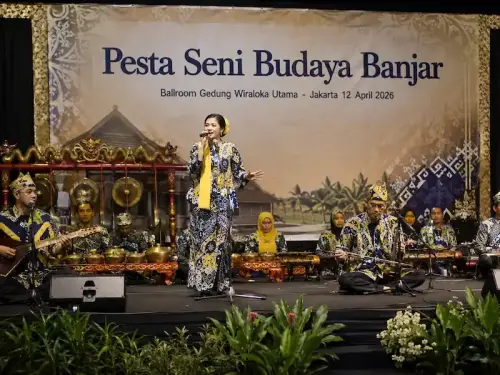
Banjar food is not merely meant to satisfy hunger; it is also an important part of cultural identity. At family gatherings, celebrations, religious events, and traditional ceremonies, Banjar specialties are often served as symbols of respect and togetherness. Their presence in these social settings demonstrates that Banjar cuisine fulfills a role far beyond everyday consumption. Banjar feasts typically feature dishes considered worthy of guests, both in flavor and presentation. In this context, food becomes a language of honor. Serving Soto Banjar, Nasi Kuning, Ketupat, or other signature Banjar dishes reflects courtesy, generosity, and cultural identity. Even in religious gatherings, food serves a similar social purpose: strengthening relationships, fostering unity, and preserving ancestral heritage.
The dining traditions of the Banjar people also illustrate how traditional cuisine forms part of life's rituals. During weddings, thanksgiving ceremonies, and family events, certain dishes repeatedly make an appearance. This ensures that Banjar cuisine survives not only because it is delicious but also because it is deeply rooted in strong social traditions. As long as these traditions continue, Banjar food will remain alive. Conversely, dishes that appear only in ritual contexts or require specialized preparation techniques tend to become less common in modern daily life, except during special occasions.
Behind the popularity of Soto Banjar and Ketupat Kandangan lies a dish that is becoming increasingly difficult to find: Laksa Banjar. Once widely enjoyed throughout Banjarmasin, the number of vendors selling it has steadily declined. As a result, Laksa Banjar is often regarded as a rare culinary treasure that deserves preservation.
Traditional and Favorite Banjar Dishes: From Popular Classics to Rare Culinary Treasures
Soto Banjar, a World-Renowned Culinary Icon
No discussion of Banjar cuisine would be complete without mentioning Soto Banjar. This dish is the most famous culinary specialty of South Kalimantan and has become a regional icon recognized throughout Indonesia. The history of Soto Banjar is believed to trace back to the period after 1563, when Chinese traders began arriving in Banjarmasin. Many culinary historians associate the word "soto" with a Hokkien dialect term referring to seasoned soup dishes. Through a long process of cultural adaptation, the Banjar people developed their own version, resulting in the Soto Banjar known today.
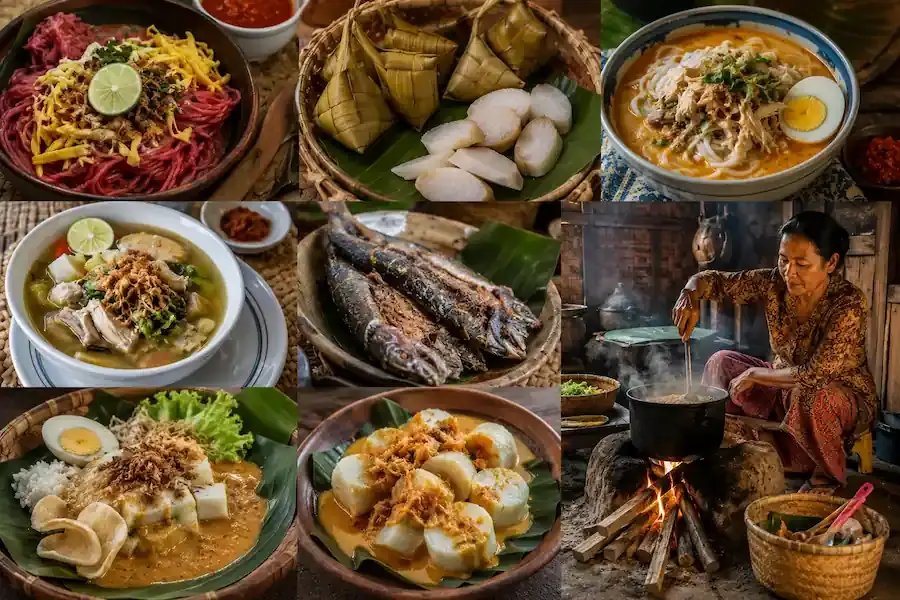
The main ingredients of Soto Banjar include free-range chicken simmered until tender, ketupat, scallions, celery, and a blend of spices such as cinnamon, cloves, and nutmeg. This unique spice combination gives the dish its distinctive aroma, setting it apart from other Indonesian soto varieties. In Banjar culinary history, Soto Banjar is often regarded as one of the finest examples of the fusion between local flavors and foreign influences, particularly through its use of noodles or glass noodles, spices, and broth-based presentation techniques. It has become a culinary icon thanks to its clear aromatic broth, served with ketupat, glass noodles, and shredded chicken.
The popularity of Soto Banjar is reflected in countless traveler reviews. Many visitors describe it as especially enjoyable during cool weather or rain. Several Soto Banjar restaurants in Banjarmasin have even become must-visit culinary destinations due to their authentic flavors and affordable prices. Traditionally, Soto Banjar is served warm with ketupat, boiled eggs, potato fritters (perkedel), and a squeeze of lime for added freshness. Preparing it requires a moderate level of skill, as it involves lengthy simmering and careful spice preparation to achieve the perfect broth. Soto Banjar remains one of the most beloved traditional dishes and is widely recognized across Indonesia.
Ketupat Kandangan, the Pride of South Hulu Sungai
If Soto Banjar represents all of South Kalimantan, then Ketupat Kandangan is the pride of the South Hulu Sungai region. Originating from the town of Kandangan, this dish has been a local favorite for generations. To this day, several legendary eateries established in the 1970s continue to preserve the original recipe under the management of family descendants.
Ketupat Kandangan consists of loosely packed ketupat, which differs from the denser Javanese version, served with grilled snakehead fish, rich coconut milk, and a variety of signature Banjar spices. Its uniqueness lies in the combination of creamy coconut milk and the smoky aroma of grilled fish. The flavor is rich, slightly spicy, and highly satisfying, making it suitable for breakfast or lunch. This dish reflects the Banjar people's close relationship with river and wetland resources. Its savory and distinctive taste has made it one of the region's most celebrated specialties.
Many locals consider Ketupat Kandangan a dish they miss most when living away from home. It is also frequently recommended to visitors seeking an authentic Banjar culinary experience. Traditionally, the ketupat is gently broken apart in a bowl before being topped with hot coconut milk gravy and pieces of grilled fish. The preparation is moderately challenging, requiring separate processes for grilling the fish and cooking the coconut milk broth. Ketupat Kandangan remains one of the most popular traditional dishes of South Kalimantan.
Laksa Banjar, a Rare Culinary Heritage Worth Preserving
Despite the popularity of Soto Banjar and Ketupat Kandangan, another traditional dish has become increasingly rare: Laksa Banjar. Once commonly found throughout Banjarmasin, it is now sold by only a small number of vendors. Consequently, Laksa Banjar is often regarded as a culinary heritage that deserves preservation. Its main ingredient is white rice noodles served with a thick yellow coconut milk broth enriched with carefully selected spices.
Laksa Banjar offers a deeply savory flavor, a rich and creamy broth, and a fragrant spice profile. At first glance, it may resemble other laksa dishes found across Southeast Asia, but Banjar spices give it a unique identity. It is typically served hot with dried fish or other traditional side dishes. Preparing Laksa Banjar ranges from moderately difficult to challenging, as the spice-rich coconut broth requires careful handling to prevent separation while maintaining balanced flavors. Today, Laksa Banjar is often found only at traditional ceremonies, family gatherings, or long-established eateries that continue to preserve old recipes.
Masak Habang, the Tempting Red Dish
Masak Habang is one of the easiest traditional Banjar dishes to recognize due to its striking red color. The word "habang" means "red" in the Banjar language. This vibrant color comes from red chilies and a distinctive spice blend that creates an appetizing appearance. The main ingredients may include beef, chicken, or fish cooked in Banjar-style red seasoning. Its flavor profile is dominated by savory and spicy notes, accompanied by a powerful spice aroma. This dish frequently serves as a centerpiece at family gatherings, traditional celebrations, and major festivities.
Masak Habang is best enjoyed with pundut, rice wrapped in banana leaves. The preparation is moderately challenging, as the seasoning must be cooked long enough to fully penetrate the meat. Today, Masak Habang remains one of the most popular and sought-after traditional Banjar dishes.
Gangan Humbut, a Special Dish for Honored Guests
At many formal Banjar events, Gangan Humbut is one of the most anticipated dishes. It combines beef ribs with humbut, the tender core of a young coconut trunk. This unique pairing creates a distinctive texture and rich flavor. The broth is savory and fragrant with spices, while the slowly cooked ribs become exceptionally tender.
Because it requires a lengthy cooking process, Gangan Humbut is considered moderately difficult to prepare. It is commonly served with lontong or ketupat during Ramadan, wedding celebrations, and traditional ceremonies. This special dish remains closely associated with Banjar hospitality and festive occasions.
Pekasam, the Legacy of Traditional Fermentation Techniques
For generations, the Banjar people have been known for their ability to preserve river catches through traditional methods. One notable example is Pekasam. This traditional side dish is made from freshwater fish such as climbing perch, swamp gourami, or young snakehead fish. The fish is fermented using salt and roasted glutinous rice. The fermentation process creates a distinctive sour flavor that blends with the fish’s natural savoriness and the heat of chili peppers.
Because fermentation requires both time and precision, Pekasam is considered moderately to highly difficult to prepare. It is usually fried or stir-fried before being served alongside warm rice. Pekasam represents a traditional preservation technique that has become increasingly rare in everyday life.
Mie Bancir and Other Popular Dishes
Mie Bancir is another fascinating example of Banjar cuisine that reflects cultural interaction. The presence of noodles in Banjar culinary traditions can be traced to Chinese and Peranakan influences, which were later adapted to local tastes. Its broth is not overly abundant, while its bold seasoning gives it a distinctive character. Today, Mie Bancir remains a popular traditional dish that is easy to find throughout the region.
Popular Dishes Today
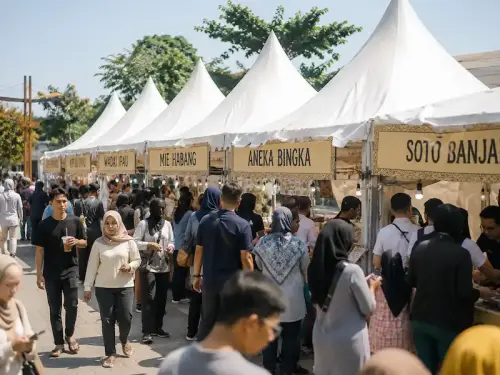
Several traditional Banjar dishes remain widely popular and readily available, including Soto Banjar, Ketupat Kandangan, Banjar-style Nasi Kuning, Mie Bancir, Sop Banjar, Ayam Cincane, and Sate Tulang. These dishes can be found in Banjar restaurants, local food stalls, and culinary festivals, making them favorites among both tourists and local residents. Banjar-style Nasi Kuning also holds an important place in local culinary traditions. Although yellow rice is found throughout Indonesia, the Banjar version has its own distinctive presentation and accompaniments. It is typically served with chicken, eggs, sambal, serundeng, and various local side dishes that create a festive appearance. Nasi Kuning is commonly served during important celebrations, highlighting its strong social and cultural significance.
Sop Banjar, Ayam Cincane, and Sate Tulang also remain highly sought after by both local residents and visitors. These dishes are relatively easy to find in traditional Banjar restaurants, culinary markets, and at various cultural events.
Dishes Becoming Increasingly Rare
However, some dishes are gradually disappearing from public view. Laksa Banjar, certain varieties of gangan, traditional recipes made with specific fish species, and older dishes that require fermentation or lengthy preparation processes are becoming less common in everyday life. These foods are now mostly found in traditional households, cultural ceremonies, or specialized food stalls that continue to preserve old recipes. Urbanization, changing lifestyles, and younger generations’ preference for fast food have contributed to the declining presence of some traditional dishes.
Lontong Banjar also remains a familiar part of daily life. This dish is commonly enjoyed as a breakfast meal or a filling snack. Its continued popularity demonstrates that Banjar cuisine thrives not only during major celebrations but also within the everyday routines of local communities.
When documenting the history of Banjar cuisine, it is often more effective to focus on dishes that are gradually losing their place in public life rather than compiling long lists that may vary from one region to another. It is also important to note that “rare” does not necessarily mean extinct; many of these dishes continue to survive within specific communities. Some traditional Banjar dishes are encountered less frequently in everyday life—not because they have disappeared completely, but because they are prepared less often. Certain recipes now appear mainly during special celebrations, within households that preserve generations-old traditions, or in dedicated eateries committed to maintaining culinary heritage.
Ingredients and Cooking Techniques
Adaptation to River and Wetland Environments
Banjar cuisine makes extensive use of local ingredients such as free-range chicken, snakehead fish, ketupat, coconut milk, and a wide variety of spices. These ingredients are chosen because they are readily available in the riverine and wetland environments where Banjar communities have traditionally lived. Their use demonstrates how Banjar cuisine evolved through adaptation to its natural surroundings. Traditional Banjar dishes cannot be understood merely as a collection of meals that satisfy hunger. Behind every dish lies a long history of a society shaped by rivers, swamps, and wetlands. This environment has profoundly influenced ingredients, cooking methods, and dining habits. As a result, Banjar cuisine remains closely associated with water resources, spices, coconut milk, fish, chicken, and rice as its primary source of sustenance.
The cooking techniques employed are diverse, but many revolve around broths, simmering, and carefully cooked spice mixtures. These methods help create deep aromas and flavors that fully penetrate the ingredients. In many Banjar dishes, patience and precision during the cooking process are essential to achieving the final taste. Techniques such as boiling, simmering with spices, cooking with coconut milk, salting, and fermentation evolved as practical responses to environmental conditions and social needs. For generations, the Banjar people have been known for their ability to transform river resources into foods that can be preserved for longer periods.
Banjar Cuisine in Tradition and Cultural Identity
Evidence of Assimilation Without Losing Identity
Banjar cuisine demonstrates how local culture can absorb outside influences without losing its identity. Chinese, Arab, Portuguese, Dutch, and other cultural influences added new dimensions to Banjar food, yet the Banjar people transformed these elements into something uniquely their own. This is what makes Banjar cuisine so fascinating: it emerged through cultural encounters while maintaining its distinct character. It reflects a long history, cultural fusion, and a wealth of flavors born from centuries of assimilation.
In Banjar culture, traditional cuisine often serves as a medium for expressing social relationships. When hosting guests, organizing communal gatherings, or celebrating special occasions, the dishes served are carefully selected. Considerations include flavor, symbolic meaning, and customary values. This is why Traditional Banjar Cuisine cannot be separated from the everyday life of its people. Preserving traditional food means preserving the collective memory of the Banjar community. Within every bowl, plate, and piece of wadai lies a story about history, tradition, and the pride of a region shaped along the great rivers of South Kalimantan.
The Current Popularity of Banjar Cuisine
The Appeal of Flavor and History Creating Opportunities for Business and Cultural Promotion
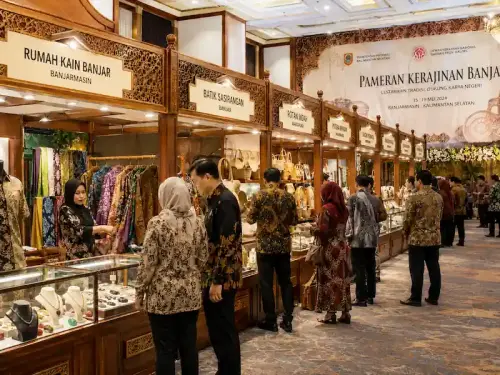
Today, Banjar cuisine is becoming increasingly well known across Indonesia. Banjar restaurants, Soto Banjar, Ketupat Kandangan, and a variety of traditional wadai can now be found far beyond South Kalimantan. This growing recognition demonstrates the strong appeal of Banjar cuisine, both in terms of flavor and historical significance. Its popularity also creates valuable opportunities for cultural promotion and culinary entrepreneurship. Through digital media, stories about the history and cultural assimilation behind Banjar cuisine can reach broader audiences. The more people understand its background, the greater the chances that Banjar culinary traditions will continue to thrive and evolve in the future.
These dishes remain relatively easy to find in Banjar restaurants, food markets, and special events. This accessibility helps Banjar cuisine endure not only because it is delicious but also because it remains deeply embedded in social traditions. As long as these traditions continue, Banjar food will remain alive.
A Heritage Worth Preserving
Documentation, Promotion, and Innovation That Respects Tradition
Protecting Banjar cuisine means preserving its recipes, techniques, and social context. Documentation, culinary tourism promotion, education for younger generations, and support for traditional food stalls are essential measures to ensure that certain dishes do not disappear from public memory. At the same time, encouraging innovation that respects traditional flavors can help Banjar cuisine remain relevant in modern markets without losing its identity. Without proper documentation and transmission, some dishes may gradually fade from public awareness, even though each one contains stories of origin, cultural migration, and the development of Banjar identity.
This cuisine deserves to be continually documented, introduced, and preserved—not only so that outsiders can appreciate its flavors, but also so future generations understand that Traditional Banjar Cuisine represents something far greater than a collection of recipes. It is a narrative about environment, trade, assimilation, tradition, and regional pride. By understanding these dimensions, we can appreciate Banjar food not merely as a meal, but as a living part of history that continues to be prepared today.
Traditional Banjar Cuisine as a Living Cultural Narrative
Traditional Banjar Cuisine reflects the relationship between environment, trade, and social identity. From rivers that provide fish to trading vessels that brought spices and culinary ideas, all these elements met, blended, and evolved into the dishes known today. Soto Banjar, Ketupat Kandangan, Nasi Kuning, Mie Bancir, and many other specialties are not only delicious—they also preserve stories of cultural exchange, environmental adaptation, and collective traditions that continue to be practiced. Recording and preserving these stories is just as important as preserving the flavors themselves.
Banjar cuisine is a reflection of a long history, cultural fusion, and rich flavors shaped through centuries of assimilation. Chinese, Arab, Portuguese, Dutch, and other cultural influences did not erase Banjar identity; instead, they enriched its culinary diversity. From Soto Banjar to Ketupat Kandangan, these dishes demonstrate how local traditions absorbed foreign influences and transformed them into a distinctive culinary heritage. By understanding the history and flavors of Banjar cuisine, we do more than enjoy its food—we gain appreciation for the cultural journey that shaped it. Banjar cuisine proves that food can serve as a bridge between history, identity, and regional pride.
Traditional Banjar Cuisine remains a living cultural heritage today. It exists not only on dining tables but also within the collective memory of the community. Every spoonful of broth, every piece of ketupat, and every aroma of spice carries a long history of cultural encounters and local perseverance. Therefore, discussing Traditional Banjar Cuisine means discussing the history, identity, and journey of the Banjar people themselves. Soto Banjar, born from cultural acculturation; Ketupat Kandangan, a source of regional pride; the increasingly rare Laksa Banjar; and traditional cakes such as Bingka and Amparan Tatak that continue to endure amid modernization—all are invaluable elements of Banjar cultural heritage.


From Banjar to the world, showcasing information, culture, tourism, local businesses, and products with global potential.