
A Savory, Luxurious Flavor Always Present on Special Occasions
When people hear the term wadai, many immediately think of a variety of traditional cakes that are sweet, colorful, and served alongside tea or coffee.
In Banjar culture, most wadai are indeed associated with sweet flavors. However, there is one particularly fascinating exception: Wadai Ipau.
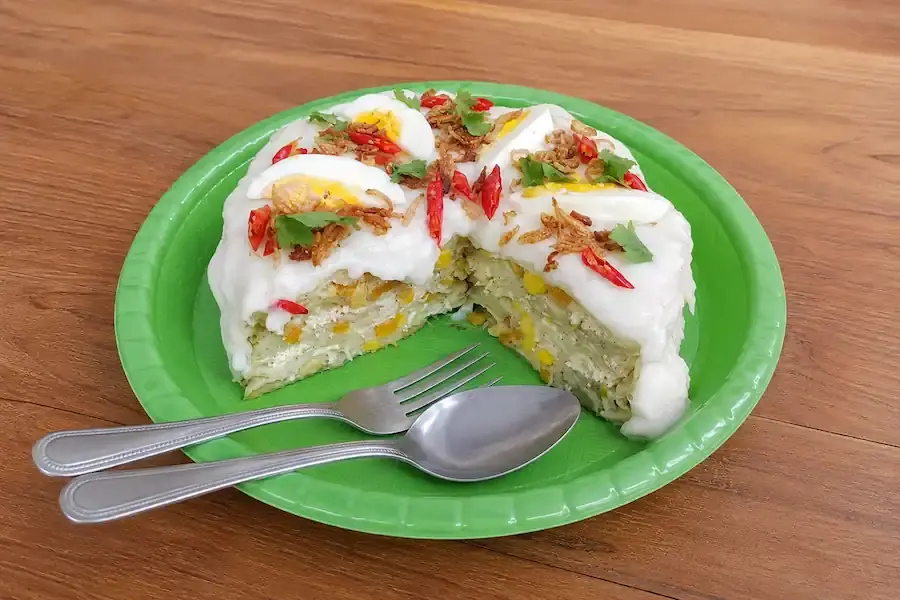
For people outside South Kalimantan, Ipau is often given a unique nickname: “the Banjar version of lasagna.” This nickname is not without reason. At first glance, its appearance resembles Italian lasagna, with neatly arranged layers and a rich filling.
Yet behind this visual similarity, Ipau possesses an identity that is entirely different and distinctly Banjar.
Wadai Ipau is more than just a traditional dish.
It is a symbol of Banjar culinary elegance, a dish of honor typically served only at important events, and proof of how the Banjar people have skillfully transformed various cultural influences into a unique and distinctive delicacy.
What Is Wadai in Banjar Culture?
Before learning more about Ipau, it is important to first understand the meaning of the word wadai.
In the Banjar language, wadai means cake or traditional snack. However, the concept of wadai in South Kalimantan extends far beyond simple refreshments.
Wadai is an important part of Banjar cultural identity and is almost always present at traditional ceremonies, religious celebrations, thanksgiving events, and family gatherings.
The Banjar community even has a famous tradition known as 41 kinds of wadai, in which dozens of traditional cakes are served during certain occasions as a symbol of respect for guests and as a way of preserving cultural heritage.
Among these many varieties of wadai, Ipau occupies a unique position because it does not follow the common pattern of sweet cakes. Instead, Ipau stands out as a savory dish that resembles a main course more than a simple snack.
The Origin of the Name Ipau
The name Ipau comes from the Banjar word “epau”, which can be loosely translated as a layered cake.
The name perfectly reflects its physical appearance. When sliced, Ipau reveals neat and attractive layers. Each layer offers textures and flavors that complement one another, creating a dining experience unlike that of most traditional cakes.
The exact history of Ipau is difficult to trace in detail. However, the Banjar people believe that this dish has been passed down through generations and has become an important part of Banjarmasin’s culinary tradition.
Because its preparation is relatively complex and requires numerous ingredients, Ipau has long been regarded as a special dish that is not typically served on an everyday basis.
Why Is It Called Banjar Lasagna?
Many people who see Ipau for the first time immediately understand why this dish is often compared to lasagna.
Both feature a layered structure that serves as their main attraction. However, the similarity ends with their appearance.
While lasagna is made with sheets of pasta and traditional Italian sauces, Ipau uses thin pastry layers arranged one on top of another with a savory Banjar-style filling.
Between these layers is a mixture of seasoned minced beef or chicken, potatoes, carrots, eggs, onions, and garlic.
All of the ingredients are carefully cooked until fully done, producing an irresistible aroma.
Once the layers have been assembled, Ipau is topped with a coconut milk mixture that gives the dish an even softer texture and richer flavor.
As a finishing touch, the surface is garnished with fried shallots and celery leaves, adding both fragrance and visual appeal.
The result is a dish that looks luxurious, is satisfyingly filling, and stands apart from most traditional Indonesian cakes.
A Flavor Combination That Is Hard to Forget
One of the main reasons Wadai Ipau is so beloved is its complex flavor profile.
From the very first bite, its savory character takes center stage. The richly seasoned minced meat provides a strong foundation of flavor, while the coconut milk contributes a smooth richness that envelops the entire dish.
The potatoes and carrots add a subtle natural sweetness and a texture that brings every layer to life.
Meanwhile, the onions and garlic create depth and aroma, while the topping of fried shallots adds a delightful crunch.
Unlike many Banjar wadai that focus on sweetness, Ipau offers an experience more similar to a main course. As a result, many people find that a single generous slice is already quite filling.
This unique combination is what makes Ipau a favorite, even among those who do not usually enjoy traditional cakes.
A Dish of Honor for Special Occasions
In Banjar society, not all foods hold the same status.
Some dishes are prepared for everyday meals, while others are reserved for important occasions. Wadai Ipau belongs to the latter category.
For generations, Ipau has been served at weddings, traditional ceremonies, family thanksgiving gatherings, and various other major celebrations.
Its presence is considered a gesture of respect toward guests because its ingredients are relatively costly and its preparation is far more elaborate than that of many other traditional cakes.
Making Ipau requires patience and attention to detail. Each layer must be carefully arranged to achieve the perfect texture when sliced and served.
For this reason, Ipau is often regarded as a symbol of a host’s sincerity and hospitality.
A Ramadan Favorite
In addition to its popularity at traditional events, Wadai Ipau also holds a special place during the month of Ramadan.
At the many wadai markets that appear before sunset during the fasting month, Ipau is almost always among the most sought-after delicacies.
The reason is simple: it is savory, filling, and perfectly suited for breaking the fast after a long day.
While many people choose sweet treats for iftar, Ipau offers something different. Its combination of meat, eggs, and vegetables makes it feel like a complete meal capable of restoring energy quickly.
It is no surprise that many Banjar families consider Ipau one of their favorite dishes for sharing at the iftar table.
Traces of Middle Eastern Influence in Banjar Cuisine
One of the most fascinating aspects of Wadai Ipau is the cultural blending reflected in its creation.
For centuries, South Kalimantan was part of important trade routes connecting the Indonesian archipelago with various regions of the world, including the Middle East. Merchants and Islamic scholars who arrived in the region brought cultural influences that extended to the culinary world.
In Ipau, this influence can be seen in the use of spices and cooking techniques that create a richly seasoned savory flavor.
Although the dish has adapted to local ingredients and Banjar tastes, traces of these external influences can still be recognized today.
This is what makes Ipau fascinating not only from a culinary perspective but also from a historical and cultural one.
A Culinary Heritage Worth Preserving
Amid the growing popularity of modern foods and international culinary trends, Wadai Ipau continues to endure as one of the great prides of the Banjar people.
It proves that traditional food does not have to be simple or monotonous. Through creativity and cultural heritage, the Banjar community has created a dish that is unique, elegant, and full of character.
Every layer of Ipau contains more than just meat, coconut milk, and spices. It carries stories of family traditions, Banjar hospitality, centuries of cultural exchange, and a deep appreciation for regional culinary heritage.
That is why Wadai Ipau is far more than simply the “Banjar lasagna.”
It is one of South Kalimantan’s culinary masterpieces, demonstrating that Indonesia’s traditional foods possess a richness of flavor and history every bit as captivating as the world’s most celebrated dishes.