When the Identity of a People Is Preserved in the Hands of Artisans
Every region possesses cultural heritage that serves as a marker of its identity. Some places are known for their dances, languages, or historic architecture. South Kalimantan has all of these, yet there is one treasure that often receives far less attention than it deserves: the traditional handicrafts of the Banjar people. In fact, if one wishes to understand how the Banjar community has lived, worked, thought, and adapted over the course of centuries, traditional handicrafts provide one of the best windows through which that story can be viewed.
Banjar handicrafts did not emerge in isolation. They developed from a close and enduring relationship between people and their natural surroundings. The great rivers that functioned as the lifeblood of daily life, the tropical forests that supplied abundant raw materials, and the trading networks that connected Kalimantan with Java, Sulawesi, Sumatra, India, the Arab world, and China all contributed to shaping the distinctive character of Banjar culture. From this long historical process emerged a wide range of handicrafts that possess not only practical functions but also strong aesthetic value, philosophical meaning, and cultural identity.
Unlike modern industrial products that are mass-produced by machines, most Banjar handicrafts continue to preserve the human touch as their defining element. Every weave, every carving, every stitch, and every engraving carries its own unique character. No two pieces are ever completely identical. This uniqueness has become one of the greatest strengths of traditional handicrafts in an increasingly standardized modern world.
Banjar handicrafts also stand as witnesses to the long historical journey of the people who created them. From the period when Hinduism and Buddhism influenced the Indonesian archipelago, through the spread of Islam along regional trade routes, during the rise of the Banjar Sultanate as a major power in Kalimantan, and into the era of modernization and globalization, these crafts have endured and continuously adapted. They have evolved with changing times without ever losing their roots.
For this reason, discussing Banjar handicrafts is not merely a discussion about objects created by artisans. It is a discussion about history, culture, economics, identity, and humanity’s ability to create value from the resources available in its environment.
Sasirangan, the Fabric That Became a Symbol of Banjar Identity
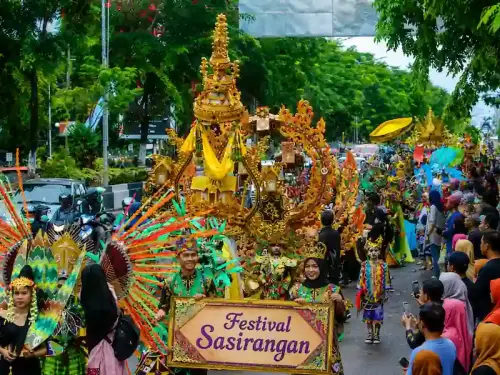
Among all Banjar handicrafts, Sasirangan occupies a uniquely special position. If Yogyakarta is known for batik and Sumatra for songket, then South Kalimantan is known for Sasirangan, the cultural symbol most widely associated with Banjar identity.
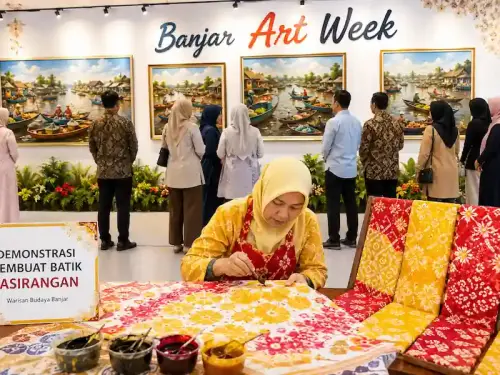
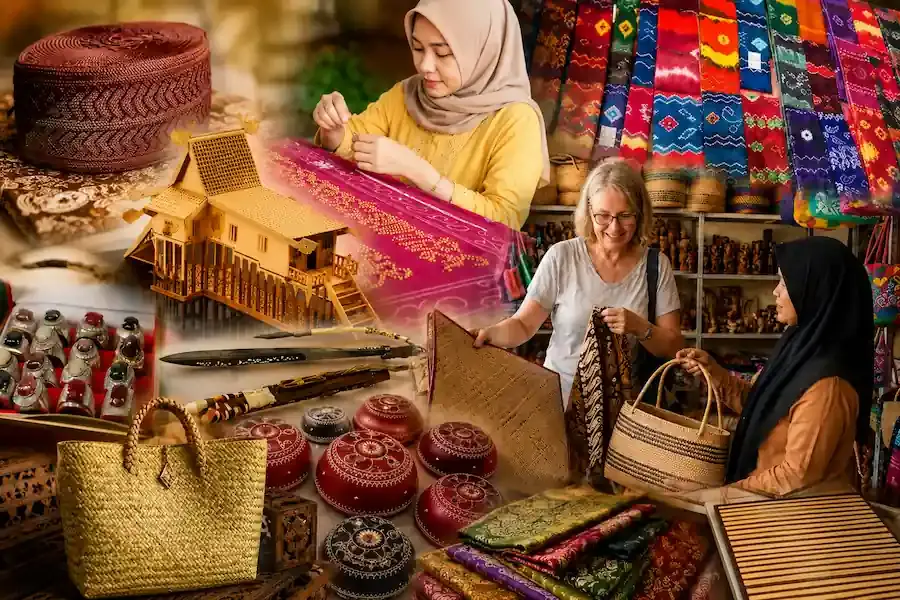
Sasirangan derives from the Banjar words sirang or manyirang , which refer to the process of hand-stitching a fabric with thread before it is dyed. Traditionally, the threads used were made from cotton or tree-bark fibers. This technique produces distinctive patterns that emerge once the stitching threads are removed. As a result, every piece of fabric possesses its own character, since no two pieces can ever be perfectly identical.
The history of Sasirangan is believed to stretch back for centuries. In ancient Banjar society, this fabric was far more than ordinary clothing. It was frequently used in traditional rituals associated with health, protection, and well-being. Certain colors were believed to correspond with particular illnesses or specific hopes and wishes. For that reason, the selection of motifs and colors in earlier times was never arbitrary.
As Islam spread throughout South Kalimantan, many ritual elements gradually changed. Nevertheless, the beauty and cultural significance of Sasirangan were preserved. What had once been a fabric used within traditional and spiritual contexts evolved into a cultural product embraced by all levels of society.
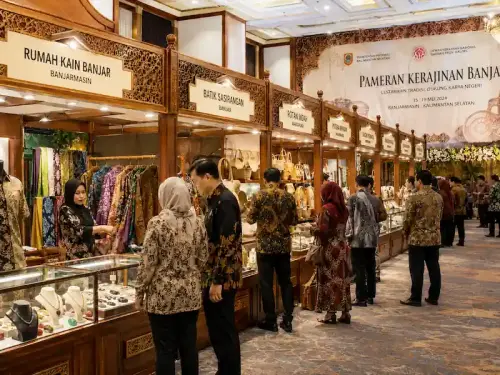
Today, Sasirangan appears in many forms, including formal attire, office wear, evening gowns, scarves, handbags, wallets, shoes, and interior decoration products. Traditional motifs such as Gigi Haruan, Naga Balimbur, Kulat Karikit, Kangkung Kaumbakan, and Ombak Sinapur Karang continue to be maintained, although many contemporary artisans also create new variations to meet modern market demands.
The continued survival of Sasirangan demonstrates that tradition does not have to become a lifeless artifact preserved only in museums. On the contrary, tradition can remain vibrant and relevant when it adapts to changing times without sacrificing its essential identity.
Sulam Arguci, Luxury Born from Precision
In addition to Sasirangan, the Banjar people are also known for Sulam Arguci, one of their traditional textile arts distinguished by exceptional artistic value. Sulam Arguci has long been associated with aristocratic circles and the families of the Banjar Sultanate because, in earlier times, it served as a symbol of luxury and social prestige. According to stories preserved through generations of Banjar oral tradition, Arguci was regarded as an emblem of the wealth and status of the sultanate’s nobility.
This embroidery is created through an extraordinarily intricate process. Every pattern is crafted entirely by hand with remarkable precision. Even a minor mistake can affect the overall design, making concentration, skill, and years of experience essential to its production.
Within Banjar culture, Sulam Arguci is valued not only for its visual beauty but also as a symbol of patience, perseverance, and dedication. An embroiderer may spend weeks or even months completing a single piece, depending on the complexity of the motif being produced.
In the modern era, Arguci Embroidery faces significant challenges. The number of artisans who master these traditional techniques continues to decline as younger generations tend to pursue other occupations that are considered more economically promising. However, it is precisely because of its rarity that the cultural value of Arguci Embroidery has become even greater and increasingly important to preserve.
Purun Bags, From Marsh Grass to High-Value Products
One of the most fascinating examples of Banjar creativity is their ability to transform wetland plants into valuable economic products. Purun, a plant that grows naturally in the wetlands of South Kalimantan, has long been used as a raw material for various woven handicrafts.
In the past, purun weaving was primarily used for everyday necessities such as mats, storage containers, and other household items. The production process was entirely manual and mainly carried out by villagers. However, market development has encouraged the creation of a wide range of innovative products with a much more modern appeal.
Today, purun bags have become one of the most sought-after handicraft products. They come in various forms, ranging from simple shopping bags to fashionable accessories designed for tourists and middle-class consumers. The main advantage of purun bags lies in their eco-friendly nature, as all of their raw materials are sourced from nature and are naturally biodegradable.
Interestingly, as the world reduces its reliance on single-use plastics and shifts toward sustainable products, purun bags have gained new opportunities. What was once considered a traditional village product now has the potential to become a global commodity that aligns perfectly with modern lifestyle trends.
Rattan Lampit, A Mat That Became Part of Everyday Life
Rattan is one of Kalimantan’s most important natural resources. From this versatile plant emerge various handicrafts that have become an integral part of Banjar life, one of which is the rattan lampit.
Lampit is a traditional mat created through a meticulous rattan weaving process. Unlike ordinary mats, lampit features a strong structure, exceptional durability, and the ability to remain functional for many years. In fact, many lampit mats are passed down from one generation to the next as family heirlooms.
In traditional Banjar society, lampit serves a much broader purpose than simply providing a place to sit. Families gather on it, welcome guests, hold discussions, share meals, and conduct various social activities. In other words, lampit forms an essential part of the community’s social space.
Because of its close connection to daily life, lampit stands as an excellent example of how traditional handicrafts can become deeply integrated with culture and help shape patterns of social interaction within a community.
Rattan Weaving, An Art Born from the Forests of Kalimantan
In addition to lampit mats, rattan is also used to create a wide variety of products with substantial economic value. Banjar artisans transform rattan into bags, baskets, storage containers, shelves, chairs, tables, flower holders, and many other attractive household decorations.
The strength of rattan lies in its unique combination of being lightweight, strong, flexible, and durable. These characteristics make it an ideal material for a wide range of products. It is therefore no surprise that Indonesia has long been recognized as one of the world's largest suppliers of rattan products.
For the Banjar people, the ability to work with rattan is more than just an economic skill. It is a form of traditional knowledge passed down through generations. The techniques for selecting materials, drying processes, weaving patterns, and maintaining product quality are all forms of expertise acquired through long experience and inherited from one generation to the next.
Banjar Wood Carving, A Language Carved into Wood
The Banjar woodcarving tradition developed alongside the growth of wooden architecture in South Kalimantan. Traditional Banjar houses, especially the Bubungan Tinggi House, are renowned not only for their distinctive roof design but also for the intricate carvings that adorn various parts of the structure. On doors, windows, roof trims, pillars, and walls, master carvers create a variety of motifs inspired by the surrounding natural environment, including flowers, creeping vines, leaves, and harmoniously arranged geometric patterns.
The influence of Islam is strongly reflected in Banjar woodcarving art. Depictions of humans and animals are relatively rare, while plant motifs and abstract patterns are far more dominant. These carvings serve not only as decorative elements but also as symbols of social status and cultural identity. The more intricate the carvings on a house, the higher the prestige of its owner in the eyes of the community.
Banjar Wood Carvings in Traditional Architecture
The vine motifs, floral patterns, and geometric designs carved into traditional Banjar houses demonstrate the close relationship between aesthetics, social status, and religious values.
Banjar woodcarvers typically inherit their skills through generations. Carving techniques, wood selection, and motif composition are passed down within families. The process requires exceptional patience, as every detail must be carved by hand. In many cases, a single carved panel can take weeks or even months to complete.
In the modern era, Banjar wood carvings are no longer limited to traditional houses. Many artisans have begun developing new products such as wall decorations, picture frames, decorative panels, and souvenirs aimed at tourists. This approach helps ensure that traditional craftsmanship continues to maintain economic relevance amid changing lifestyles and consumer preferences.
Brass and Silver Craftsmanship, Luxury Shaped by Hand
In addition to wood, the Banjar people also possess a strong tradition of metalworking. Brass and silver are used to create jewelry, traditional accessories, ceremonial equipment, and various decorative objects. This craft developed alongside the growth of trade and cultural interactions throughout South Kalimantan.
Unlike weaving or woodcarving, metalworking requires highly precise technical skills. Artisans must understand the processes of shaping, heating, soldering, and polishing to produce refined and durable products. Even a small mistake can compromise the entire piece.
Banjar brass and silver products are often chosen as high-value souvenirs because they combine functionality, beauty, and local cultural elements. The motifs commonly follow traditional Banjar decorative patterns, ensuring that the products remain closely connected to regional identity.
Beadwork, Color, Creativity, and Adaptation to Changing Times
Beadwork has developed as a highly versatile form of decorative art. Relatively simple materials can be transformed into bracelets, necklaces, bags, clothing embellishments, and a wide variety of modern accessories. The greatest strength of beadwork lies in its ability to adapt to market trends without losing its traditional character.
In the hands of Banjar artisans, beads are more than mere ornaments. The arrangement of colors, patterns, and shapes often reflects local aesthetic preferences. Compared with some other traditional crafts, beadwork is also easier to adapt into contemporary designs, giving it strong market potential among younger generations.
Kopiah Jangang, A Unique Hat Made from Tree Roots
One of the most distinctive handicrafts of South Kalimantan is the Kopiah Jangang. This traditional cap is made from the roots of the jangang tree through a lengthy process carried out entirely by hand. The raw materials must be carefully selected, cleaned, processed, and woven until they form a sturdy and durable cap.
The entirely manual production process and its uncommon raw materials make the Kopiah Jangang one of the most unique Banjar handicrafts, carrying significant cultural value.
Kopiah Jangang is more than just a head covering. It reflects the creativity of the Banjar people in utilizing the natural resources available around them. Because the production process is complex and the number of skilled artisans is limited, this cap possesses high cultural significance and is often sought after as a collectible item.
Martapura Gemstones, When the Earth Becomes Jewelry
The name Martapura is almost inseparable from gemstones. The city is widely known as the "City of Diamonds" and has served for decades as the center of the precious stone trade in South Kalimantan. Various types of gemstones, including amethyst, topaz, sapphire, agate, and diamonds, can be found in this region.
The expertise of the people of Martapura extends beyond trading. Their skills also lie in cutting and polishing stones to maximize their brilliance. The value of a gemstone often increases many times over after passing through the hands of skilled craftsmen. This industry has become one of the strongest economic and cultural identities of South Kalimantan.
For visitors, Martapura offers a unique experience. They not only purchase jewelry but also witness how rough stones are transformed into valuable works of art through human skill and craftsmanship.
Traditional Household Crafts, From Palm Fiber to Coconut Shells
Not all Banjar handicrafts are created for tourists or collectors. Many originated from everyday household needs. It is through these simple objects that the ingenuity of the community in utilizing natural resources becomes most apparent.
Palm Fiber Broom
Palm fiber brooms are made from fibers of the sugar palm tree attached to wooden or bamboo handles. Although simple in appearance, these brooms are renowned for their strength and durability. They remain widely used today because of their effectiveness in cleaning rough surfaces.
Coconut Shell Ladle
The coconut shell ladle is crafted from a coconut shell that is cut, smoothed, and fitted with a wooden handle. This object reflects the principle of making full use of natural resources. What might otherwise be considered waste is transformed into a practical kitchen utensil with both functional and aesthetic value.
Bamboo Weaving, Bakul Bamban and Nyiru
Bamboo plays an important role in traditional Banjar life. From this material come various household tools that are both practical and durable.
Bakul Bamban
Bakul Bamban is a woven basket traditionally used for carrying harvested crops, goods for trade, and daily necessities. Its lightweight yet sturdy construction makes it ideal for use in markets as well as agricultural activities.
Nyiru or Niru
Nyiru is a rice-winnowing tray made from woven bamboo. Before rice-processing machines became common, it served as an essential tool for cleaning and separating rice from impurities. Even today, nyiru remains in use in many households and is often displayed as a decorative element that evokes a traditional atmosphere.
These traditional household items demonstrate how bamboo can be transformed into objects that are lightweight, durable, and highly functional for everyday use.
Miniature Sailing Ships, Memories of River Trade
Banjar culture is closely connected to rivers and waterborne trade. For this reason, miniature sailing ships have become one of the wooden handicrafts that attract the attention of visitors. These miniatures typically depict traditional vessels that were once used to transport goods and navigate the waterways of Kalimantan.
Beyond serving as souvenirs, miniature sailing ships also symbolize the maritime history of the Banjar people. They serve as a reminder that the economy of South Kalimantan depended heavily on river routes and waterborne commerce for centuries.
Sumbul, A Traditional Bamboo Water Container
Sumbul is a traditional drinking water container made from bamboo. It is practical, lightweight, and easy to carry while traveling. In rural communities, the sumbul exemplifies how natural materials were used to meet daily needs long before the advent of modern technology.
Although plastic and metal bottles are now more commonly used, the sumbul continues to hold cultural value as a representation of a traditional lifestyle that was simple, sustainable, and closely connected to nature.
Water Hyacinth Crafts, Transforming Weeds into Valuable Products
Water hyacinth is often regarded as an invasive weed that disrupts waterways. However, some artisans see it as an opportunity. After being dried and processed, water hyacinth can be woven into tissue holders, baskets, bags, and a variety of other decorative products.
This craft is particularly interesting because it combines economic and environmental benefits. A material once considered a problem can be transformed into a marketable product. In today's world, where sustainability is increasingly emphasized, water hyacinth crafts have significant potential for continued growth.
Future Opportunities, Tradition That Adapts
Despite various challenges, Banjar handicrafts also have considerable opportunities for growth:
- Global trends favoring environmentally friendly, handmade, and culturally inspired products are opening new markets. Purun bags, rattan weaving, and water hyacinth crafts are particularly well suited to the needs of modern consumers who are becoming increasingly conscious of sustainability.
- Cultural tourism provides valuable opportunities for traditional handicrafts to flourish. Visitors are often seeking not only products but also experiences and the stories behind their creation. Crafts with strong cultural narratives tend to attract greater interest in the marketplace.
- Digitalization offers another pathway for growth. Through social media, online marketplaces, and digital platforms, artisans from villages across South Kalimantan can now reach customers far beyond their local communities.
A Heritage That Must Remain Alive
Banjar handicrafts are proof that culture is not preserved only in history books. It lives within the objects that are created, used, inherited, and continuously given meaning by the people who cherish them. From Sasirangan, the textile identity of the Banjar people, to Arguci Embroidery, which preserves traces of royal elegance; from purun bags that have entered modern markets, to rattan lampit mats that serve as family gathering spaces, and the gemstones of Martapura that connect nature with human craftsmanship, all reflect the remarkable creativity of the people of South Kalimantan.
In the midst of globalization, preserving traditional handicrafts does not mean rejecting modernity. What is needed is the ability to connect heritage with contemporary needs. When design, marketing, and innovation move hand in hand with the preservation of traditional techniques, Banjar handicrafts can continue to thrive and evolve.
Ultimately, a nation is recognized not only by the buildings it constructs today, but also by the heritage it successfully preserves from the past. In South Kalimantan, one such legacy lies in the skilled hands of Banjar artisans, who continue to transform fabric, rattan, bamboo, wood, roots, metal, and stone into cultural identities that can be passed on to future generations.


From Banjar to the world, showcasing information, culture, tourism, local businesses, and products with global potential.