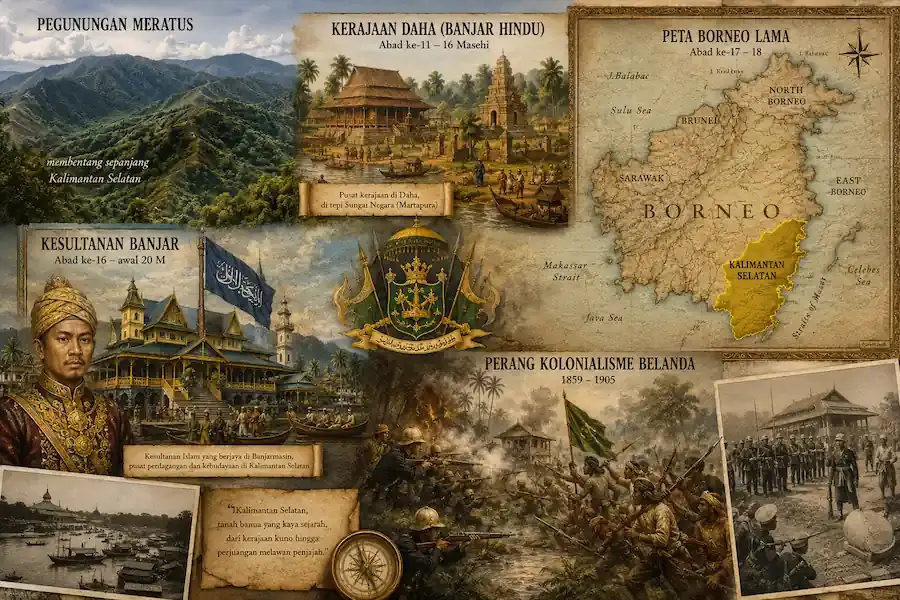
From River Civilization to the Cultural Identity of South Kalimantan
The Long Journey of Civilization in the Land of Banjar
The history of Banjar is a long story of the emergence of a civilization that grew among the great rivers of South Kalimantan. The journey of the Banjar people is not only associated with the rise of kingdoms and sultanates, but also reflects the formation of a cultural identity that developed over centuries.
When discussing Banjar, many people immediately think of Banjarmasin, the floating markets, sasirangan textiles, or the Banjar Sultanate. However, the historical roots of the Banjar people are actually much older than these well-known symbols. Evidence of human habitation has been discovered in the Meratus Mountains, indicating that South Kalimantan has been inhabited since prehistoric times.
This long historical journey eventually gave rise to great kingdoms, international trade centers, the spread of Islam, resistance against colonialism, and ultimately an important role within the modern Republic of Indonesia.
Prehistoric Era: The Beginning of Life in the Meratus Mountains
Long before the emergence of kingdoms and sultanates, the region now known as South Kalimantan was inhabited by ancient human communities. Archaeological evidence discovered in the Meratus Mountains indicates human activity dating back thousands of years.
The area now recognized as the Meratus Geopark preserves numerous prehistoric remains, including stone artifacts, ancient settlement sites, and cultural traces that reveal communities living through hunting, gathering, and the utilization of surrounding natural resources.
During this period, early communities were formed that later developed into various ethnic groups across Kalimantan. Many scholars believe that the Banjar people share close historical ties with Dayak communities, particularly the Meratus Dayak or Bukit Dayak who inhabited the mountainous regions.
This historical connection can still be observed today in various aspects of culture, language, and traditions throughout South Kalimantan.
The Kingdom of Negara Daha: The Foundation of Banjar Civilization
During the Hindu-Buddhist era, South Kalimantan developed into an important political center on the island of Kalimantan. One of the most influential kingdoms was the Kingdom of Negara Daha.
The kingdom was ruled by Maharaja Sukarama and continued political traditions that had previously flourished in southern Kalimantan. Negara Daha maintained an organized system of government and trade relations with various regions throughout the Indonesian archipelago.
At this time, Hinduism served as the primary influence on political and social life. Royal administration, legal systems, and court traditions developed following patterns commonly found in Hindu kingdoms across the archipelago.
The geographical location of South Kalimantan, traversed by major rivers, made the region an important trade route. Forest products, rattan, damar resin, and various natural resources were traded with merchants from Java, Sumatra, Sulawesi, and even foreign lands.
The Kingdom of Negara Daha became the foundation from which the Banjar Sultanate, one of Kalimantan's largest Islamic kingdoms, would later emerge.
The Establishment of the Banjar Sultanate and the Rise of Sultan Suriansyah
The early sixteenth century marked a major turning point in Banjar history. A succession conflict within the Kingdom of Negara Daha brought about significant changes that would shape the future of South Kalimantan.
Prince Samudera, who held a legitimate claim to the throne, faced political rivalry that compelled him to seek external support. During his struggle, he established ties with the Demak Sultanate, one of the most powerful Islamic states in Java at the time.
With military assistance from Demak, Prince Samudera successfully secured power. As part of the political transformation and agreement, he embraced Islam and adopted the title Sultan Suriansyah.
This event marked the founding of the Banjar Sultanate around 1520 or 1526 CE. Sultan Suriansyah is remembered as the first sultan in Banjar history.
The capital of the sultanate was established in Kuin, now part of the city of Banjarmasin. Its strategic location near the Barito River made it a thriving center of trade and government.
The Golden Age of the Banjar Sultanate
During the seventeenth and eighteenth centuries, the Banjar Sultanate entered its golden age. Its strategic geographical position enabled Banjar to develop into one of the most important trading centers in the Indonesian archipelago.
The primary commodity that brought prosperity to the sultanate was pepper. At the time, pepper was among the most valuable goods in international trade, attracting merchants from many countries to Banjar.
The territory of the Banjar Sultanate was also extensive. Its influence stretched from Tanjung Sambar to Tanjung Aru, covering much of Kalimantan.
In addition to being a commercial hub, Banjar became a center for the spread of Islam throughout Kalimantan. Religious scholars, teachers, and merchants played vital roles in introducing Islamic teachings to inland regions.
One of the most influential figures of this era was Muhammad Arsyad al-Banjari, known as Datu Kalampaian. He was a renowned Islamic scholar whose works remain important references in the Islamic world of the Indonesian archipelago.
His influence extended beyond South Kalimantan to many parts of Indonesia and Southeast Asia.
The Arrival of Dutch Influence
By the nineteenth century, Banjar's political and economic landscape began to change. European powers, particularly the Dutch, became increasingly active in expanding their influence throughout the archipelago.
Initially, relations between Banjar and the Dutch were based on trade. Over time, however, economic interests evolved into political and military ambitions.
The Dutch sought control over South Kalimantan's abundant natural resources, including mining products and valuable trade commodities. Various agreements gradually reduced the sovereignty of the Banjar Sultanate.
Tensions between the sultanate and the colonial government continued to rise. Dutch interference in royal succession affairs generated widespread dissatisfaction among Banjar nobles and the general population.
These circumstances ultimately sparked one of the largest wars in Kalimantan's history.
The Banjar War: Resistance Against Colonialism
The Banjar War erupted in 1859 as a form of resistance against Dutch domination and interference.
The leading figure of the struggle was Prince Antasari, a Banjar nobleman who held significant influence among the people. Together with his followers, he organized resistance across various parts of South Kalimantan.
In addition to Prince Antasari, Sultan Hidayatullah II played an important role in the struggle. As a grandson of Sultan Adam, he became a symbol of legitimacy for the Banjar people's resistance against colonial rule.
The conflict was fierce and involved many segments of society. Not only nobles, but also ordinary citizens, religious scholars, and traditional leaders participated in the struggle.
Although the Dutch eventually won the war in 1862, the spirit of resistance remained alive and became an important chapter in Indonesia's national struggle.
The Fall of the Banjar Sultanate
Following the Banjar War, the position of the Banjar Sultanate weakened significantly. On June 11, 1860, the Dutch colonial government officially abolished the Banjar Sultanate.
The Banjar territory was subsequently placed under the colonial administrative system. Political authority once held by the sultanate was replaced by structures controlled by the Dutch.
Nevertheless, descendants of the royal family and supporters of the sultanate continued resistance efforts in several inland regions for decades afterward.
Officially, the Banjar Sultanate ceased to exist in 1905. However, Banjar cultural heritage, traditions, and identity continued to endure among the people.
From the Colonial Era to Indonesian Independence
During the Dutch East Indies period, Banjar society continued to experience social and political transformation. Modern education was introduced, while nationalist awareness grew among various groups.
Several Banjar figures contributed to Indonesia's national movement, including Ahmad Barmawi Thaib and Amir Hasan Kiai Bondan, both known for their roles in social development and national struggle.
When Indonesia proclaimed its independence in 1945, the Banjar people also participated in defending the newly independent nation against challenges that emerged during the revolutionary period.
The spirit of resistance inherited from the Banjar War became an important foundation for shaping the national identity of South Kalimantan's people.
Banjar in Modern Indonesia
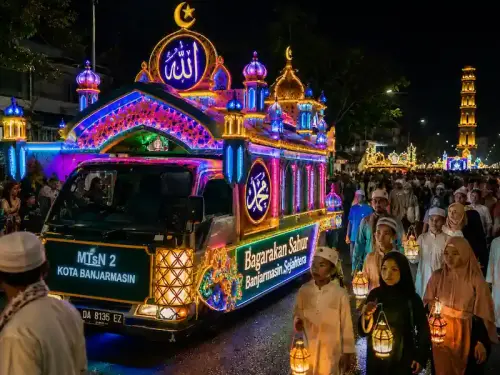
Following independence, South Kalimantan developed into one of Indonesia's important provinces. The Banjar people have continued to preserve their cultural heritage amid modernization and changing times.
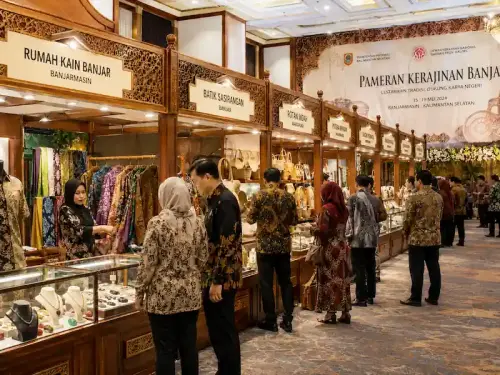
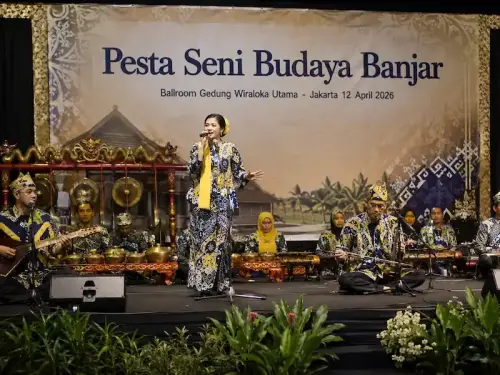
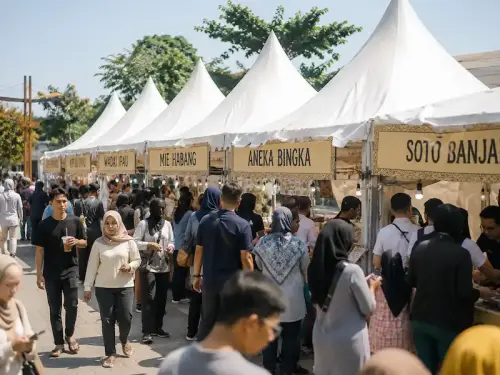
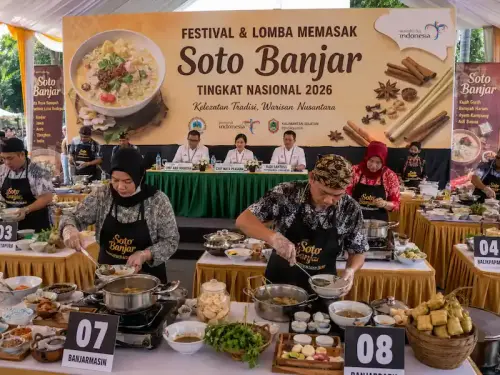
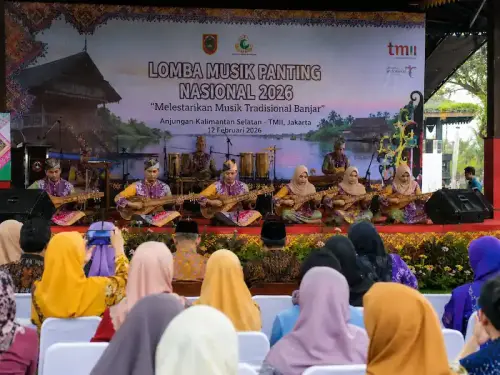
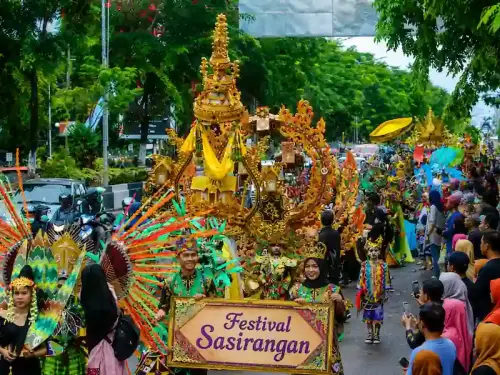
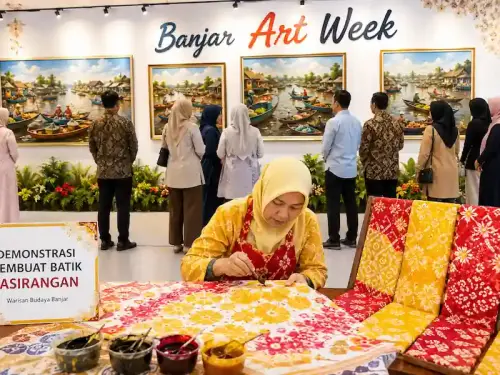
The Banjar language remains widely spoken in daily life. Traditions such as floating markets, panting music, Banjar cuisine, and sasirangan textiles continue to be preserved and introduced to younger generations.
Many Banjar figures have also contributed to various fields. In religious scholarship, notable names include Abdul Hamid Abulung al-Banjari, Abdul Karim al-Banjari, and Muhammad Arsyad al-Banjari. In culture and linguistics, Adjim Arijadi and Banjar language expert Abdul Djebar Hapip are highly respected.
In the modern era, Zainuddin Nafarin became widely known as the creator of the Smadav antivirus software, used by millions of computer users across Indonesia.
The Banjar Legacy for the Future
The history of Banjar is a story of a society's ability to adapt to changing times without losing its identity. From prehistoric settlements in the Meratus Mountains emerged kingdoms, sultanates, international trade centers, and a modern society that continues to preserve its ancestral traditions.
This heritage belongs not only to the Banjar people but also forms part of Indonesia's rich cultural legacy. Through history, language, arts, traditions, and values passed down from generation to generation, Banjar continues to demonstrate that local identity can flourish and contribute meaningfully to an increasingly globalized world.
Banjar is not merely the name of an ethnic group or a region. Banjar is the enduring journey of a civilization that continues to live, grow, and enrich the history of Indonesia to this day.


From Banjar to the world, showcasing information, culture, tourism, local businesses, and products with global potential.