
The Banjar Ancestors’ Wisdom That Turned River Fish into a Legendary Delicacy
Amid the growing popularity of modern foods preserved with artificial additives and advanced storage technologies, the Banjar people had already mastered natural food preservation long before refrigerators were invented. One of the culinary traditions that has survived to this day is Iwak Pakasam, which is also known in some areas as Iwak Basamu.
For those who have never tasted it, Iwak Pakasam may sound simple. It is merely fermented fish, later fried and served with rice. Yet behind this simplicity lies a remarkable story about the river communities of Kalimantan, the ingenuity of their ancestors in overcoming limitations, and traditions passed down through countless generations.
Iwak Pakasam is more than just food. It is proof of how the Banjar people adapted to their environment and utilized available resources to create a culinary tradition that is durable, flavorful, and rich in cultural value.
Born from Life Along the Rivers
South Kalimantan has long been known as a land rich in rivers, swamps, and inland waterways. The lives of the Banjar people have always been closely connected to these rivers. Even before modern roads were developed, rivers served as the primary transportation routes and a vital source of livelihood.
A wide variety of freshwater fish could be found in abundance. Snakehead fish (haruan), climbing perch (papuyu), gourami-like fish (sepat), saluang fish, and many other species became essential parts of the daily diet.
However, the abundance of fish also presented a challenge. In earlier times, refrigerators and modern storage facilities did not exist. During periods of plentiful catches, communities needed a way to prevent fish from spoiling while ensuring it remained edible for extended periods.
Out of this necessity emerged various traditional preservation techniques, one of which was the creation of Iwak Pakasam.
This method evolved over centuries and became an important part of Banjar culinary culture. Even today, regions such as Hulu Sungai Tengah Regency are recognized as centers of Iwak Pakasam production, where traditional preparation techniques continue to be preserved.
A Traditional Fermentation Process Rich in Wisdom
While modern society often associates fermentation with yogurt, cheese, or kimchi, the Banjar people have long applied the same principles to freshwater fish.
The uniqueness of Iwak Pakasam lies in its simple yet highly effective fermentation process. Freshly caught fish are first cleaned and then coated with a mixture of salt, turmeric, and roasted rice that has been coarsely ground.
These ingredients are not chosen at random.
Salt helps preserve the fish and inhibits the growth of harmful microorganisms. Turmeric contributes a distinctive aroma while also possessing natural antimicrobial properties. Meanwhile, the roasted rice provides carbohydrates that support the fermentation process.
Once the ingredients are thoroughly mixed, the fish is stored in a sealed container for several days or even several weeks, depending on family preferences.
The longer the fermentation process continues, the stronger and more distinctive the flavor becomes. This is where the art of making Iwak Pakasam truly emerges. Each family often has its own recipe and preferred fermentation period, resulting in unique flavor profiles.
A Flavor That Is Hard to Forget
Many people who try Iwak Pakasam for the first time are surprised by its distinctive taste.
The first sensation is usually the characteristic tanginess produced by fermentation. Unlike the acidity of citrus fruits or vinegar, however, the sourness of Iwak Pakasam is deeper, more complex, and more nuanced.
This is followed by the natural savory flavor of fish that has undergone fermentation. The process partially breaks down proteins, creating richer and more complex flavors than those found in fresh fish.
The texture of the fish also changes significantly. The flesh becomes softer, and the seasonings penetrate deep into the meat.
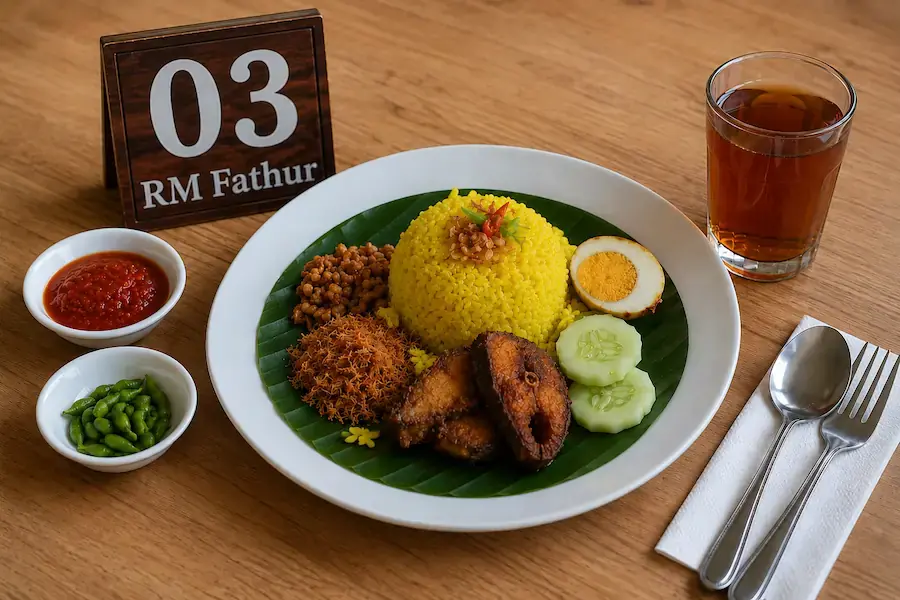
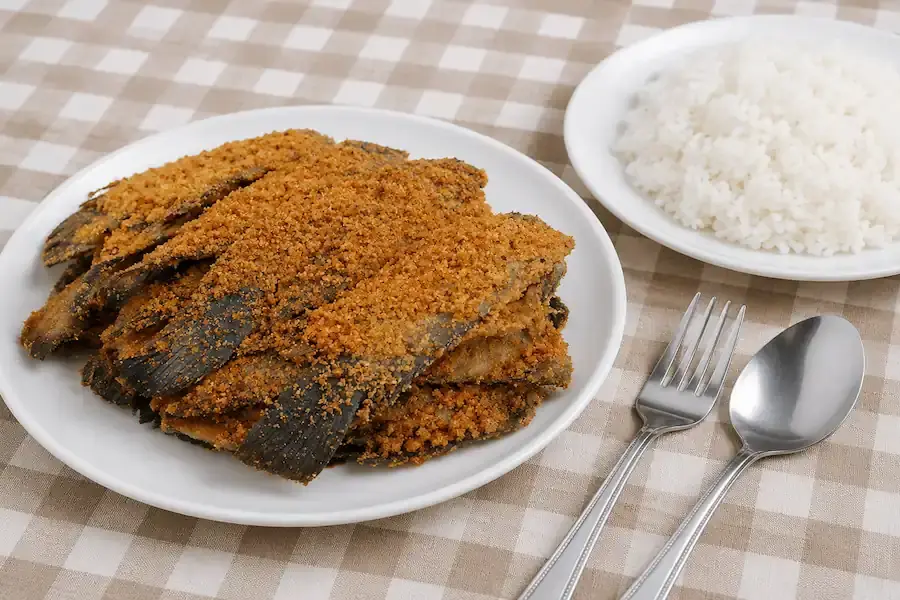
Before serving, Iwak Pakasam is typically fried until its exterior becomes crispy and golden brown. The aroma released during frying is often enough to stimulate the appetite of everyone in the house.
The combination of a crunchy exterior, tender interior, and bold sour-savory flavor creates a culinary experience unlike any other.
It is no surprise that many Banjar people consider Iwak Pakasam one of the finest side dishes to enjoy with warm rice.
The Perfect Companion for Steamed Rice
There is an unwritten rule among lovers of Iwak Pakasam: it tastes best when eaten with freshly cooked rice.
Hot rice helps balance the robust tanginess of the fermented fish. When a crispy piece of Iwak Pakasam is paired with steaming rice, the result is a simple yet deeply satisfying combination.
In many Banjar households, Iwak Pakasam is commonly served for lunch or dinner. It is often accompanied by chili sambal and fresh vegetables.
Some people also enjoy pairing it with Gangan Asam, a traditional South Kalimantan soup known for its refreshing and mildly sour flavor. Together, they create a distinctive combination that has become a favorite among many families.
Every Family Has Its Own Secret Recipe
One of the most fascinating aspects of Iwak Pakasam is that there is no single, universally accepted recipe.
Some families prefer a short fermentation period of only a few days, producing a milder sourness. Others intentionally ferment the fish for several weeks to develop a stronger and more intense flavor.
The type of fish used also influences the final result. Snakehead fish provides a firm texture, while sepat or saluang fish creates different flavor characteristics.
These subtle differences give each batch of Iwak Pakasam its own identity. Experienced Banjar food enthusiasts can often identify the region of origin of a Pakasam simply by its taste and aroma.
Evidence of the Wisdom of Banjar Ancestors
In the modern era, traditional fermentation techniques are sometimes viewed as outdated. Yet a closer look reveals the remarkable ingenuity of earlier generations.
Without access to modern technology, they discovered effective ways to extend the shelf life of fish using only natural ingredients available in their surroundings.
They understood that salt could preserve food, that fermentation could improve durability, and that specific ingredients could enhance flavor.
All of this knowledge was acquired through centuries of experience and passed down orally from one generation to the next.
For this reason, Iwak Pakasam deserves recognition not only as a traditional dish but also as a form of local knowledge that reflects a harmonious relationship between people and nature.
A Culinary Identity of Kalimantan’s Rivers
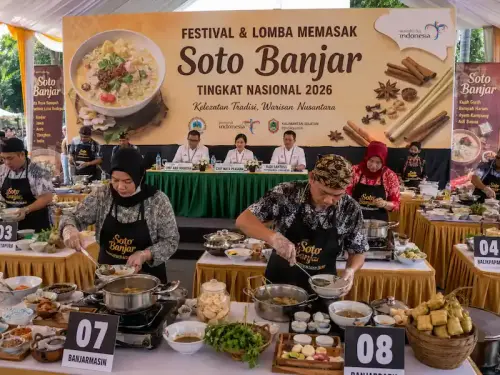
If Soto Banjar symbolizes the hospitality of the Banjar people, then Iwak Pakasam can be seen as a symbol of river life in Kalimantan.
This dish was born from the abundance of freshwater resources, developed through the creativity of local communities, and preserved through the devotion of generations to their traditions.
Despite the changes of modern times, Iwak Pakasam continues to hold a special place on Banjar dining tables. Every piece of fermented fish carries stories of rivers, families, and ancestral wisdom that have endured through time.
More than just a side dish served with rice, Iwak Pakasam demonstrates that traditional foods often contain far greater historical, cultural, and scientific value than first meets the eye.
And as long as Banjar families continue to preserve the tradition of making it, Iwak Pakasam will remain one of the great culinary masterpieces of Kalimantan’s river culture—one that Indonesia can proudly celebrate.