
The Cradle of Banjar Civilization in South Kalimantan
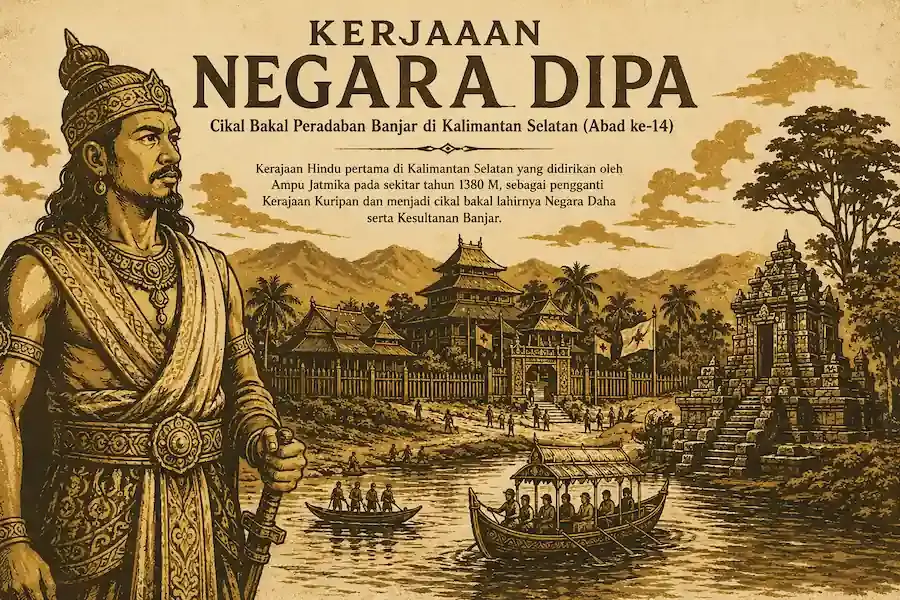
Long before the establishment of the Banjar Sultanate, which became famous in the history of South Kalimantan, this region was home to a great kingdom that laid the foundation for the identity of the Banjar people: the Kingdom of Negara Dipa.
Believed to have been founded in the late 14th century, this kingdom became one of the most important milestones in the political, cultural, and commercial development of southern Kalimantan.
In Banjar historical traditions recorded in the Hikayat Banjar and various local historical sources, Negara Dipa is known as a kingdom that served as a bridge between indigenous Dayak culture, Hindu-Javanese influences from Majapahit, and the riverine communities that would later give rise to the Banjar Kingdom.
The existence of Negara Dipa not only marked the emergence of organized government in South Kalimantan but also represented the beginning of a network of power that connected the interior of Kalimantan with the trade routes of the Indonesian archipelago.
Ampu Jatmika: The Merchant Who Founded a Kingdom
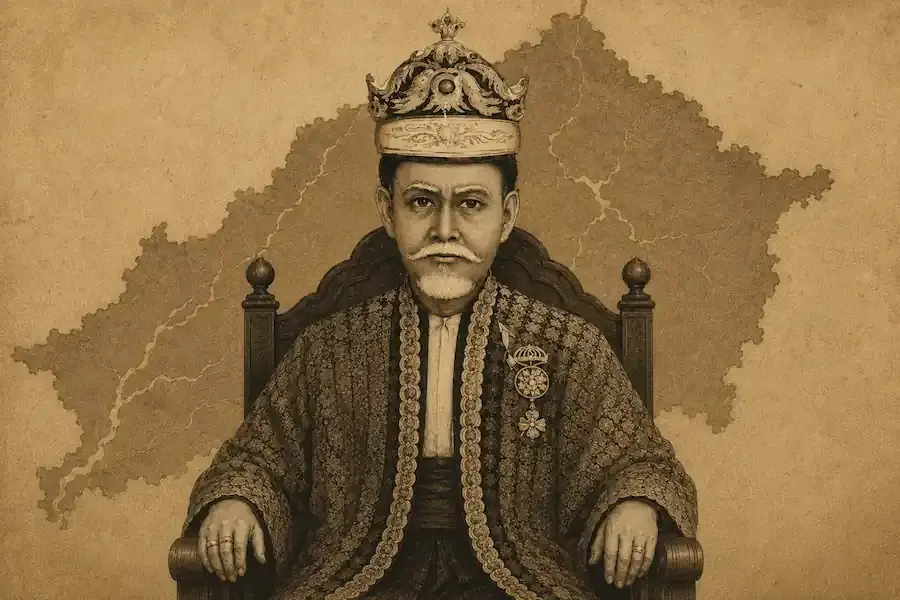
The central figure behind the establishment of Negara Dipa was Ampu Jatmika, also known as Empu Jatmika. He was renowned as a nobleman and merchant from Keling, a region that many historical accounts associate with the southern coast of India and maritime trade networks connected to Java.
According to Banjar tradition, Ampu Jatmika came to Kalimantan under the orders of the Majapahit Kingdom during the reign of King Hayam Wuruk. At that time, Majapahit was at the height of its power and sought to expand its political and economic influence throughout the archipelago.
Ampu Jatmika's arrival was not merely a trading mission. He also carried a political mandate to strengthen Majapahit's influence in South Kalimantan, which was then inhabited by various Dayak communities and local kingdoms.
After gaining influence and support from the local population, Ampu Jatmika established a new government that became the foundation of the Kingdom of Negara Dipa.
Interestingly, in Banjar tradition, Ampu Jatmika is often portrayed as a wise leader with exceptional diplomatic skills. He was able to build strong relationships with different communities, allowing his authority to be accepted without major conflict.
From Kuripan to Negara Dipa
Before the rise of Negara Dipa, South Kalimantan was believed to have been under the influence of the Kingdom of Kuripan. This kingdom was one of the earliest centers of power that developed along the river systems in what is now the Hulu Sungai Utara region.
According to traditional accounts, the relationship between Ampu Jatmika and the ruler of Kuripan was very close. In fact, Ampu Jatmika was regarded almost as the ruler's own son.
When the ruler of Kuripan passed away, the leadership of the kingdom was entrusted to Ampu Jatmika. This event became the starting point of a major transformation in the history of South Kalimantan.
Ampu Jatmika subsequently reorganized the government and renamed the kingdom Negara Dipa around the year 1380. The name Dipa is believed to originate from the Dayak Maanyan language and is associated with a kingdom located across the river or in a particular area with a strategic position along major waterways.
This change of name was more than a simple administrative adjustment; it reflected the birth of a new political identity that was larger, stronger, and more organized.
Why Were Rivers the Key to Negara Dipa's Power?
To understand the prosperity of Negara Dipa, it is important to understand the geographical conditions of South Kalimantan during that period.
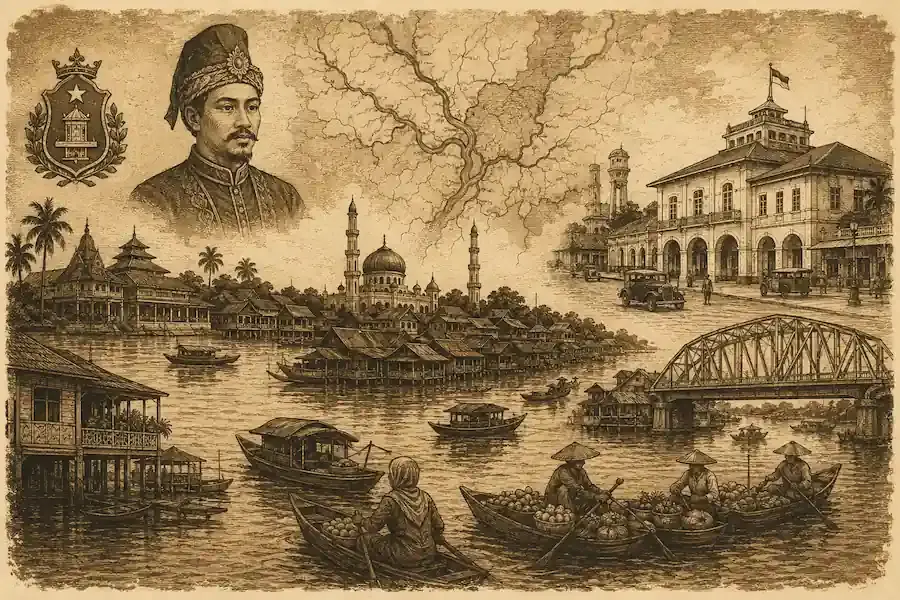
Rivers served as the primary transportation routes. Dense forests and difficult terrain made overland travel extremely limited. In contrast, the rivers functioned as "highways" that connected the interior regions with coastal areas.
Negara Dipa flourished in an area where several major rivers converged. This strategic location enabled the kingdom to control the trade of forest products such as damar resin, rattan, ironwood, beeswax, and various other valuable commodities.
Merchants from Java, Sumatra, Sulawesi, and even India could reach the region through its extensive river network. These conditions allowed Negara Dipa to develop into an important economic center in southern Kalimantan.
Candi Laras and Candi Agung: Physical Remains of the Kingdom
In the history of Negara Dipa, two locations are frequently mentioned as the kingdom’s centers of government.
The kingdom’s original capital is believed to have been located in the Candi Laras area in present-day Margasari. This site occupied a strategic position along a busy river route used for trade.
As the kingdom expanded, the center of government was later moved to the area now known as Candi Agung in Amuntai.
To this day, Candi Agung remains one of the most important historical sites in South Kalimantan. Although its structure is not as large as the famous temples of Java, the site holds immense historical significance because it is regarded as one of the principal relics of the Negara Dipa era.
Various archaeological studies indicate that the area once served as a major center of governmental and religious activity during the Hindu-Buddhist period in South Kalimantan.
Lambung Mangkurat and the Golden Age of Negara Dipa
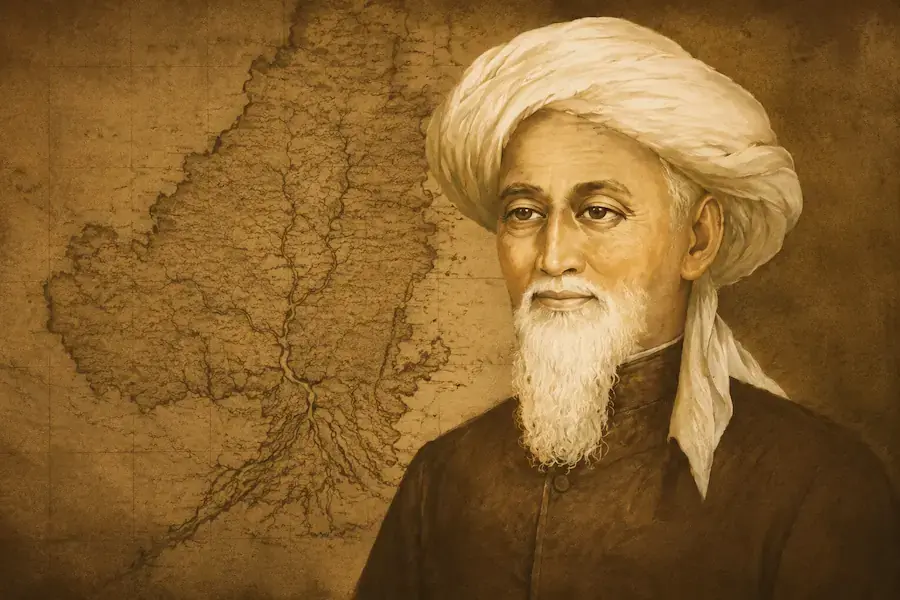
Following the era of Ampu Jatmika, the government was continued under the leadership of Lambung Mangkurat, a legendary figure who holds a highly important place in Banjar history.
The name Lambung Mangkurat appears not only in historical records but also in numerous Banjar legends and folk tales.
Under his leadership, the territory of Negara Dipa expanded significantly. The kingdom’s influence extended across various regions of South Kalimantan and even reached areas that are now part of Central Kalimantan.
This expansion was achieved through a combination of diplomacy, kinship alliances, trade, and the strengthening of local power networks.
The reign of Lambung Mangkurat is often regarded as the period during which the political and cultural foundations of Banjar society became more clearly established.
Hindu Influence and Indigenous Dayak Culture
One of the unique characteristics of Negara Dipa was its ability to blend Hindu-Javanese culture with local Dayak traditions.
Hindu influence can be seen in the system of government, royal symbols, the concept of the king as a sacred ruler, and the presence of temples as religious centers.
However, Dayak cultural elements remained strong and were not erased. Many local traditions, social systems, and beliefs of inland communities were preserved and adapted to the new cultural influences arriving from Java.
This cultural fusion eventually shaped the distinctive Banjar identity, setting it apart from other kingdoms throughout the Indonesian archipelago.
Relations with Majapahit
In various historical sources, Negara Dipa is frequently described as having close ties with Majapahit.
This relationship likely took the form of political recognition and trade connections. As a kingdom that developed during the height of Majapahit's power, Negara Dipa benefited from its association with the greatest political center in the archipelago at the time.
Through these connections, Javanese cultural influences entered South Kalimantan. Language, governmental systems, noble titles, and concepts of kingship were all significantly influenced by Majapahit traditions.
Nevertheless, Negara Dipa maintained a strong local identity and was never merely a replica of a Javanese kingdom.
The Decline of Negara Dipa and the Rise of Negara Daha
Like many kingdoms throughout the history of the Indonesian archipelago, the glory of Negara Dipa did not last forever.
Changes in trade routes, internal political conflicts, shifts in river environments, and regional power dynamics gradually reduced the kingdom’s influence.
The center of power eventually shifted to its successor state, known as Negara Daha. This new kingdom continued the political and cultural traditions that had been established during the era of Negara Dipa.
Negara Daha would later become highly significant, as it was from this kingdom that the Banjar Sultanate emerged in the 16th century following the spread of Islamic influence into South Kalimantan.
The Greatest Legacy of Negara Dipa for the Banjar People
Although more than six centuries have passed, the legacy of Negara Dipa can still be felt in the identity of the Banjar people today.
The kingdom marked the beginning of a more organized local governmental structure. It also served as a bridge between the inland Dayak culture, Hindu-Javanese influences, and the river-based communities that became the hallmark of South Kalimantan.
From Negara Dipa came Negara Daha. From Negara Daha emerged the Banjar Sultanate. From the Banjar Sultanate developed the modern Banjar identity known today.
For this reason, when discussing the history of South Kalimantan, the Kingdom of Negara Dipa should not be viewed merely as a forgotten ancient kingdom. It was the original foundation that laid the first stone for the birth of Banjar civilization—a historical legacy that continues to live on in the culture, traditions, and collective memory of the people of South Kalimantan to this day.