

The Origins of the Sultans, the Banjar War, and Its Cultural Legacy
The Banjar Sultanate was one of the largest and most influential Islamic kingdoms in Kalimantan. Its history is long and complex, beginning with a struggle for the throne in the Kingdom of Negara Daha, continuing through the Islamization period and the golden age of the pepper trade, and ultimately ending after a prolonged resistance against the Dutch during the Banjar War.
For this reason, the Banjar Sultanate holds an important place not only in the political history of South Kalimantan but also in the formation of Banjar cultural identity that continues to this day. The kingdom played a central role in the spread of Islam throughout Kalimantan and became the foundation for the development of modern Banjar society.
The Origins of the Banjar Sultanate
The roots of the Banjar Sultanate can be traced back to the Kingdom of Negara Daha, an older kingdom that ruled the region before the emergence of the Islamic sultanate in South Kalimantan.
The Kingdom of Negara Daha was a Hindu-Buddhist kingdom that existed from approximately the 5th to the 15th century. During a succession conflict within the kingdom, an important figure named Prince Samudera (or Raja Samudra) emerged as the central figure in the struggle for power. Prince Samudera was the son of Raja Kuning, the ruler of Negara Daha.
Support from regional leaders and political forces around Banjarmasin strengthened his position, eventually leading to the establishment of a new power that would later become known as the Banjar Sultanate. Prince Samudera's supporters came from various parts of South Kalimantan, including Dayak communities and local groups seeking independence from the dominance of Negara Daha.
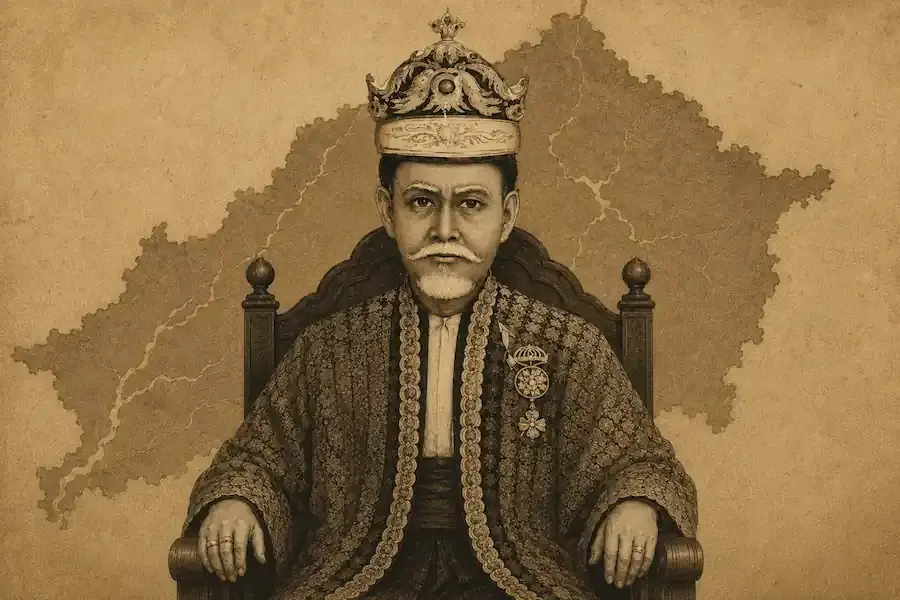
According to various historical sources, the Banjar Sultanate was established in the early 16th century, around 1520–1526 CE, with Prince Samudera as its founder. After embracing Islam, he adopted the title Sultan Suriansyah.
This event was significant because it marked a major transition from a Hindu-Buddhist kingdom to an Islamic kingdom in South Kalimantan. The year 1526 is officially commemorated as the founding year of the Banjar Sultanate and remains an important milestone in the history of Islam in Kalimantan.
The Arrival of Islam and the First Sultan
The arrival of Islam in Banjar did not occur suddenly but developed through political relations, trade networks, and the broader Islamic connections of the Indonesian archipelago. Islam had begun reaching Kalimantan through traders from Java, Sumatra, and the Arab world as early as the 13th century. However, official Islamization took place during the time of Prince Samudera.
In many historical accounts, the Demak Sultanate of Java is said to have supported Prince Samudera in his struggle for the throne.
Demak, recognized as the first Islamic kingdom in Java, sent envoys and military forces to assist Prince Samudera. After securing victory, Prince Samudera converted to Islam and ascended the throne under the title Sultan Suriansyah, who is regarded as the first sultan of the Banjar Sultanate.
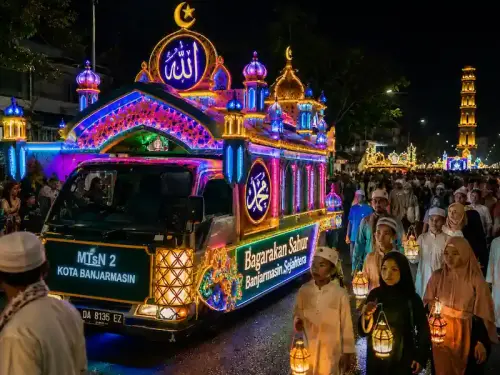
This transformation had a profound impact. Islam became the defining feature of Banjar political and cultural life. Religious traditions, arts, and customs influenced by Islamic values developed during this period, and their influence can still be seen in Banjar society today.
Islam also brought significant changes to the systems of government, law, education, and even the language used in royal documents.
The Golden Age of the Kingdom
The golden age of the Banjar Sultanate occurred primarily during the 17th century and the early 18th century, when the kingdom was ruled by a number of strong sultans who successfully maintained regional stability.
One of the most prominent periods took place under the rule of Sultan Mustain Billah (1595–1638), who is regarded as one of the most important rulers during Banjar's era of growth and strength. During his reign, the sultanate reached the height of its power and expanded its territorial influence.
During this time, Banjar flourished as a major trading center in Kalimantan. The primary commodity that brought prosperity and fame to the kingdom was pepper, alongside other valuable natural resources such as diamonds, gold, rattan, resin, bangkirai timber, and various forest products.
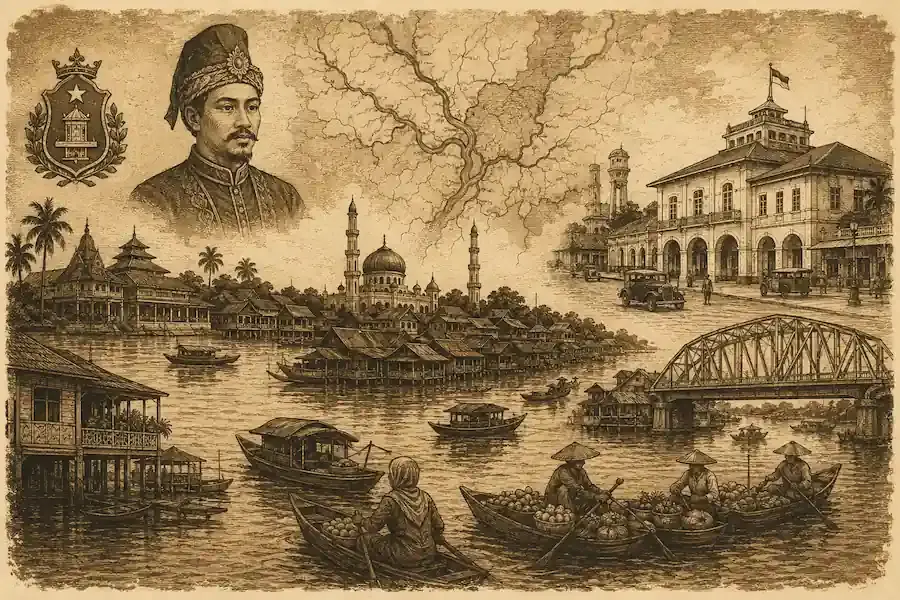
Banjar's strategic location along major river routes made it an important stop for traders from Java, Sumatra, the Maluku Islands, and even foreign regions such as China and India. Rivers served as the lifeblood of transportation and trade, creating a vibrant commercial network throughout the kingdom.
The sultanate's sphere of influence was also quite extensive. Historical records indicate that its authority once covered South Kalimantan, Central Kalimantan, parts of East Kalimantan, West Kalimantan, and even several surrounding regions through its political and trade networks.
This demonstrates that Banjar was not a small kingdom but a significant regional power that played an important role in the trade networks of the Indonesian archipelago.
List of Sultans and Government Dynamics
Throughout its nearly 400-year history, the Banjar Sultanate was ruled by numerous sultans. The following are some of the most notable rulers of the Banjar Sultanate:
- Sultan Suriansyah (1526–1548) – The first sultan and founder of the Banjar Sultanate.
- Sultan Rahmatullah (1548–1566) – Son of Sultan Suriansyah.
- Sultan Hidayatullah I (1566–1595) – Son of Sultan Rahmatullah.
- Sultan Mustain Billah (1595–1638) – Ruled during the kingdom's golden age.
- Sultan Inayatullah (1638–1642) – Son of Sultan Mustain Billah.
- Sultan Saidullah (1642–1679) – Son of Sultan Inayatullah.
- Sultan Agung (Panembahan Ratu) (1679–1704) – Period of declining royal influence.
- Sultan Hidayatullah II (1704–1744) – Early conflicts with the Dutch began during his reign.
- Sultan Muhammad Ali (1744–1761) – Entered into agreements with the Dutch.
- Sultan Tahmidullah I (1761–1794) – Era of treaties with the VOC.
- Sultan Sulaiman Salehuddin (1794–1801) – Faced increasing Dutch pressure.
- Sultan Tahmidullah II (1801–1822) – Maintained cooperation with the Dutch.
- Sultan Muhammad Ali (1822–1824) – Period marked by succession disputes.
- Sultan Umar Awang (1824–1846) – Faced internal political conflicts.
- Sultan Muhammad Seman (1846–1860) – The last sultan before the sultanate was abolished.
However, the course of government was not always smooth. Successions were often accompanied by struggles for influence, political pressure, and internal rivalries within the kingdom. At various times, the royal capital was moved from Banjarmasin to Martapura, and later to Kayu Tangi, a location that remains significant in Banjar history.
These relocations illustrate how the kingdom adapted to changing political and security conditions, particularly when facing increasing pressure from the Dutch.
Relations with the Dutch
The relationship between the Banjar Sultanate and the Dutch initially began through trade. The VOC (Vereenigde Oostindische Compagnie, or Dutch East India Company) arrived in Banjarmasin during the 17th century to purchase pepper and other natural resources.
Over time, however, Dutch involvement in the kingdom's internal affairs grew steadily. The Dutch sought not only to control Banjar's trade routes and natural resources but also to influence who would occupy the throne.
In 1787, the Dutch concluded a treaty with the Banjar Sultanate that effectively placed Banjar in a dependent position under Dutch influence.
This agreement became the foundation for deeper Dutch intervention in the kingdom's internal affairs. When succession disputes emerged between Sultan Muhammad Ali and Sultan Umar Awang during the 19th century, the Dutch supported particular factions and interfered in the selection of the sultan.
These colonial pressures generated growing tensions. As the Dutch promoted certain rulers while sidelining others, many Banjar people felt that the sovereignty of their kingdom was being undermined.
These tensions eventually escalated into the Banjar War, the largest resistance movement launched by the Banjar people against Dutch colonial rule.
The Banjar War and Popular Resistance
The Banjar War lasted from 1859 to 1905, making it one of the longest anti-colonial struggles in the Indonesian archipelago, with a duration of approximately 46 years.
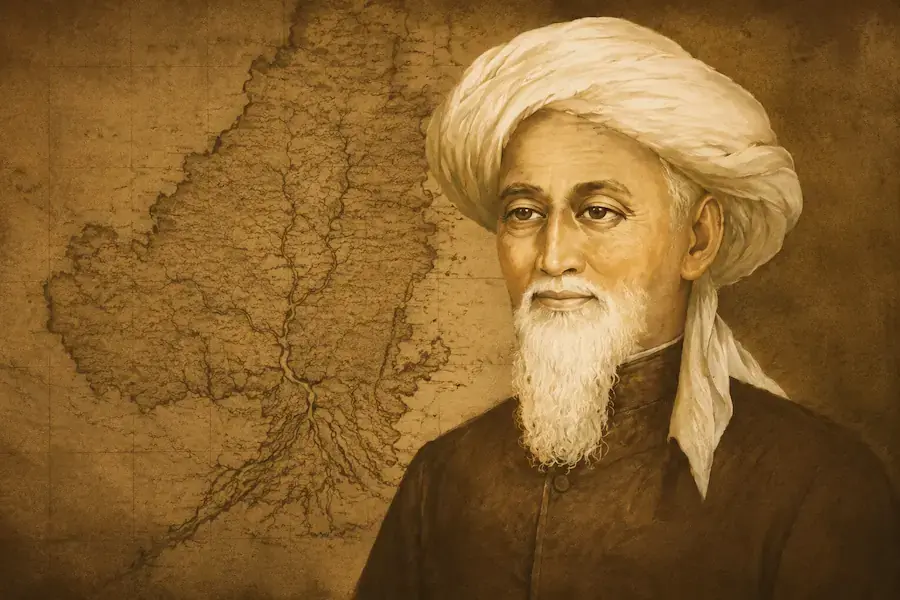
The conflict is widely regarded as a major popular uprising against Dutch colonialism. Its most celebrated leader was Prince Antasari, who led the resistance with support from religious scholars, nobles, ordinary citizens, farmers, and Dayak communities.
The war was not merely a struggle for political power but also a fight to defend religion, homeland, and the dignity of the Banjar people. Many historical accounts describe it as a people's war because it united various segments of society, including aristocrats, ulama, farmers, fishermen, and Dayak groups.
Although the resistance continued for decades, Dutch military and political power ultimately proved stronger and succeeded in bringing Banjar territory under colonial control.
The resistance was led by several important figures, including Prince Antasari, Prince Seman (Antasari's son), Prince Jayadipura, Demang Leman, and Mantri Taming Yuda. They employed guerrilla tactics and established defensive strongholds in the interior to confront the better-equipped Dutch forces.
The Fall of the Banjar Sultanate
The Banjar Sultanate was officially abolished by the Dutch on 11 June 1860 through a colonial government decree. However, the resistance did not end there. The struggle continued under leaders such as Prince Antasari and later Sultan Muhammad Seman until the early 20th century.
The final phase of resistance was led by Prince Jayadipura, who continued fighting from the interior regions until his capture by Dutch forces in 1905.
The end of this resistance marked the conclusion of the sultanate's role as an independent political power in South Kalimantan. The Dutch subsequently dismantled the royal system and replaced it with direct colonial administration. Former Banjar territories were divided into administrative districts and incorporated into the Dutch East Indies.
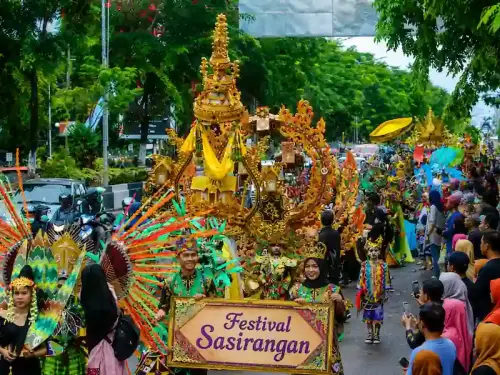
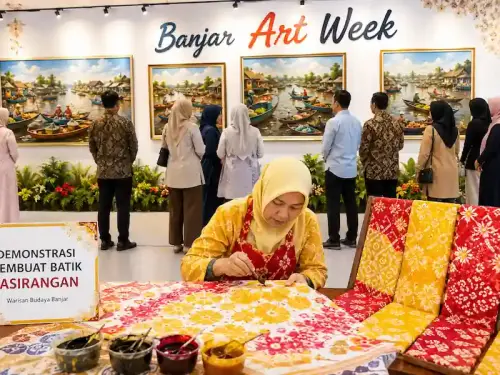
Although the kingdom itself disappeared, its influence endured. Islamic values, the Banjar language, customs, arts, and many aspects of modern Banjar social life remain deeply shaped by the legacy of the sultanate. As a result, the Banjar Sultanate continues to occupy an important place in the historical memory of South Kalimantan and forms a key component of Indonesian cultural heritage.
Legacy of the Banjar Sultanate
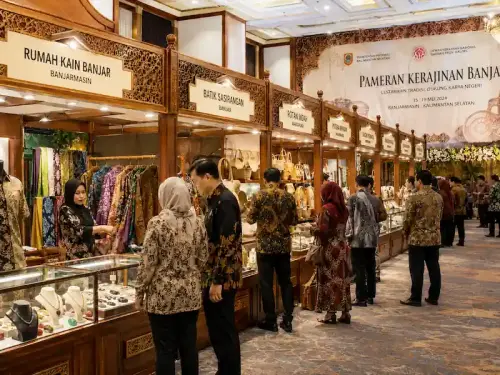
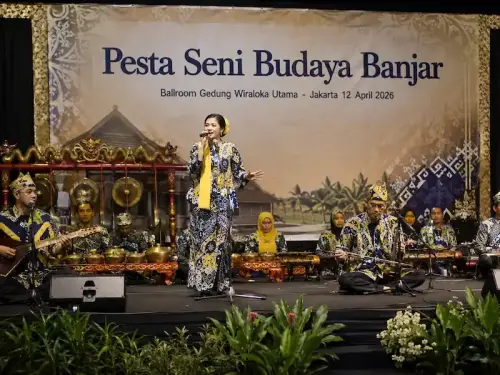
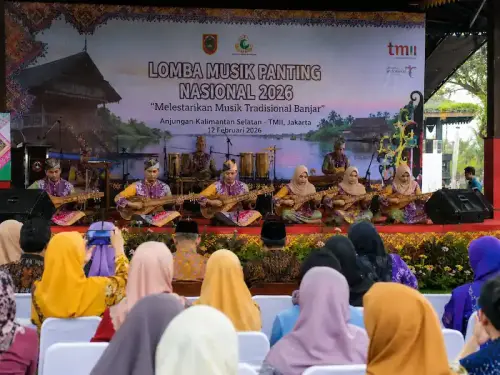
The legacy of the Banjar Sultanate remains clearly visible in Banjar culture today. Religious traditions such as Batamat Al-Qur'an, Baayun Maulid, and Madihin have strong roots in the sultanate period. Oral literature, traditional architecture such as the Bubungan Tinggi House, social customs, and the sense of pride associated with Banjar identity can all be traced back to this historical era.
The Banjar language spoken today has also been influenced by the language used in royal documents and Islamic manuscripts from the sultanate period. Kinship systems and traditional ceremonies, including Banjar wedding customs, circumcision ceremonies, and kenduri communal feasts, are likewise part of this enduring heritage.
Even the story of Banjar resistance continues to inspire regional historical and cultural education. Prince Antasari was declared a National Hero of Indonesia, while the motto "Haram Manyarah, Waja Sampai Kaputing" ("Never Surrender, Persevere Until the End") became the official motto of South Kalimantan Province. Numerous schools, roads, and public buildings throughout South Kalimantan bear Prince Antasari's name as a tribute to his legacy.
Understanding the history of the Banjar Sultanate means understanding the long journey of a kingdom that emerged from conflict, grew alongside the spread of Islam, prospered through trade, and endured through resistance against colonial rule. From Sultan Suriansyah to Prince Antasari, Banjar history reflects courage, diplomacy, and determination that continue to shape the identity of South Kalimantan today.
The Banjar Sultanate is not merely a part of local history but also an important chapter in Indonesia's national history, illustrating the struggle against colonialism and the enduring spirit of defending independence.