

History, Resistance, and the Legacy of Struggle of the People of South Kalimantan
Pangeran Antasari is one of the most important figures in the history of South Kalimantan and the history of resistance against colonialism in Indonesia.
His name is always associated with the Banjar War, a prolonged conflict fought by the Banjar people against the Dutch, which unfolded in several phases and left a significant mark on national history.
He is remembered not only as a military leader but also as a symbol of courage, unity, and determination to defend the honor of the Banjar homeland. Pangeran Antasari was officially recognized as a National Hero of Indonesia through Presidential Decree No. 87/1968, making him one of the most respected heroes in the archipelago.
Background of Pangeran Antasari
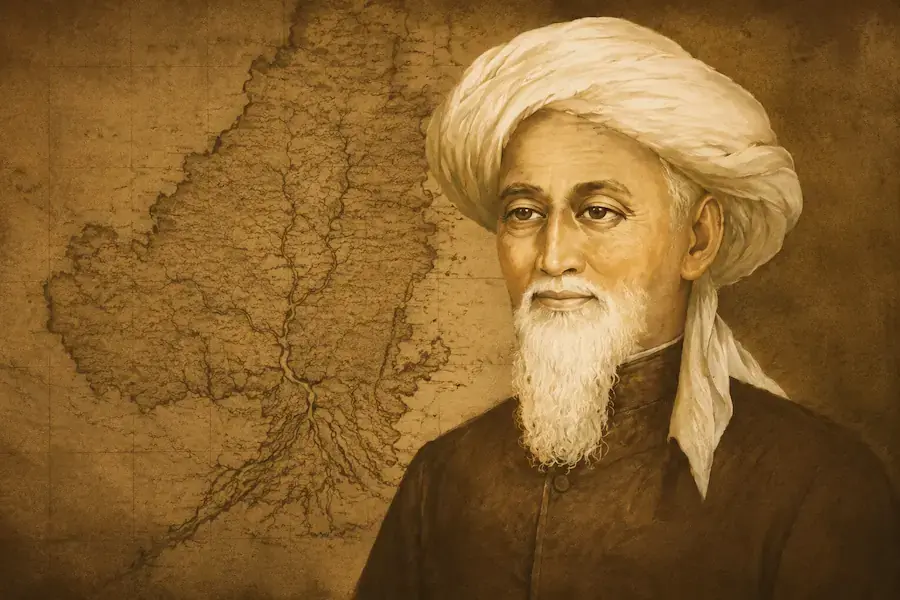
Pangeran Antasari was born into the nobility of the Banjar Sultanate in 1797 in Mengkubung Village, Rantau Kidu, Barito Maruto Regency, South Kalimantan. He came from a distinguished royal lineage, placing him from an early age within the political and cultural sphere of the kingdom.
His father was Pangeran Mas Wati, while his mother was Sayyidah Aisyah, the daughter of a prominent Banjar Islamic scholar. This combination gave Antasari a unique background: a royal nobleman and a descendant of respected religious leaders.
He was known as a firm, devout, and compassionate individual who deeply cared about the welfare of the Banjar people. At a time when the Banjar Sultanate was increasingly pressured by Dutch interference, Antasari emerged as a figure who refused to submit to colonial politics.
To many Banjar people, Pangeran Antasari was more than just a prince; he was also a moral leader. He saw that Dutch domination threatened not only the authority of the sultanate but also the sovereignty, trade, and social life of Banjar society.
From this conviction arose the open resistance that later became known as the Banjar War.
Causes of the Outbreak of the Banjar War
The Banjar War did not emerge suddenly. One of its main causes was the increasing Dutch interference in the internal affairs of the Banjar Sultanate from the early nineteenth century onward.
The Dutch sought to control natural resources, particularly silver, gold, and coal, which were abundant in Banjar territory, as well as important trade routes and Banjar’s strategic position in Kalimantan.
They also intervened in determining who had the right to rule, creating tensions among the nobility and the people.
As colonial interests became increasingly oppressive, a wave of resistance emerged from nobles, religious scholars, and ordinary citizens. Pangeran Antasari became one of the leading figures who organized and inspired this resistance.
The conflict eventually escalated into open warfare against the Dutch after they killed Pangeran Mukhtar, Antasari’s brother, in 1857. This event became a turning point that sparked widespread anger among the Banjar people and ignited a major uprising.
The Beginning of the Banjar War
Many historical sources state that the war began on 18 April 1859, when Banjar forces launched attacks on Dutch posts and facilities in the regions of Pengaron and Martapura.
These attacks marked the Banjar people's decision to pursue armed resistance. During the early stages of the war, Pangeran Antasari fought alongside commanders such as Pangeran Ali Akbar, Mantri Taming Yuda, Demang Leman, and Pangeran Jayadipura.
Together, they mobilized hundreds and later thousands of warriors to attack Dutch defensive positions.
Their objective was not merely to seize territory but to expel the Dutch from Banjar lands and restore the sovereignty of the Banjar Sultanate.
The Oath of Waja Sampai Kaputing
One of the most famous aspects of Pangeran Antasari’s struggle was the slogan "Haram Manyarah, Waja Sampai Kaputing". In the Banjar language, this expression means that surrendering to colonizers is forbidden, and the struggle must continue until the very end, like strong steel that remains steadfast to its tip.
This slogan later became a symbol of Banjar resistance and remains so today. It has even been adopted as one of the official mottos of South Kalimantan Province.
The oath reflected that Antasari’s struggle was not intended to be a short-lived campaign but a determined effort to defend the dignity of the Banjar people.
In a historical context, the slogan embodies a powerful spirit of perseverance and resilience, a legacy that continues to inspire younger generations of Banjar people as they face various challenges.
War Strategies and Popular Resistance
The Banjar War lasted for many years because the Banjar people employed effective guerrilla warfare tactics. They launched attacks on Dutch outposts in Martapura, Pengaron, Riam Kanan, along the Barito River, and throughout the interior regions of Kalimantan.
Historical records also indicate that Pangeran Antasari and his forces built defensive fortifications in remote inland areas to protect both their troops and local communities.
In addition to open warfare, efforts were made to smuggle weapons and organize resistance networks across various regions, including support from the Dayak people, who also joined the struggle.
Uniquely, this resistance movement involved many elements of society, including nobles, religious scholars, regional forces, and ordinary citizens.
For this reason, the Banjar War is often regarded as a people's war rather than merely a dynastic conflict. The cooperation between the Banjar and Dayak communities demonstrated that the resistance was multicultural and inclusive in nature.
Coronation as Sultan
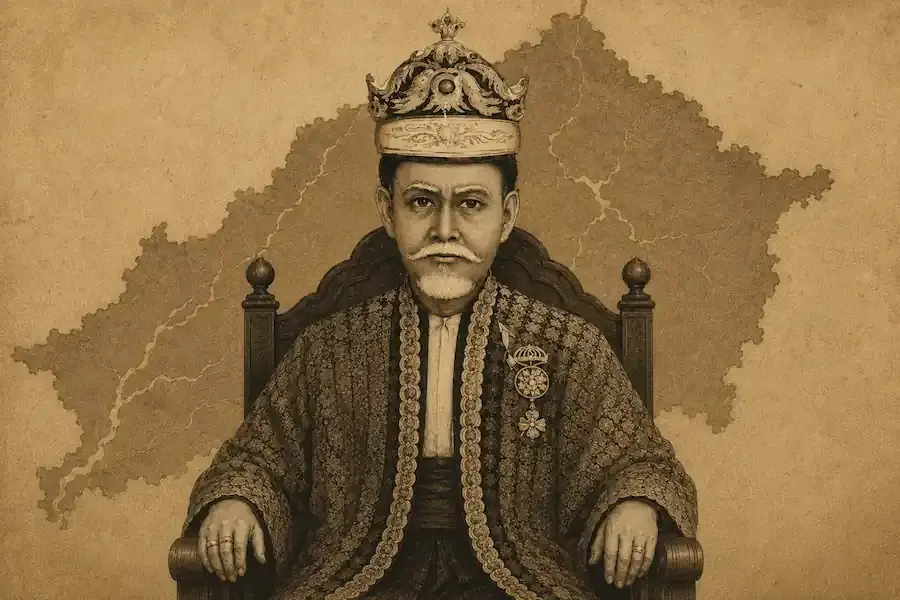
Amid the ongoing conflict, Pangeran Antasari was proclaimed sultan with the title Panembahan Khalifatul Mu'minin Amirul Mukminin on 14 March 1862. This coronation carried profound symbolic significance, as it demonstrated that the Banjar resistance still possessed political and spiritual legitimacy.
With this title, Antasari became the official leader of the Banjar Sultanate, succeeding Pangeran Hidayatullah, who had previously been captured by the Dutch.
However, later that same year, his health deteriorated. He passed away on 11 October 1862 in Meleih Village, Barito Maruto Regency, due to smallpox and respiratory illness.
Although Antasari had died, the struggle did not end. The resistance was continued by his son, Pangeran Semen, along with other Banjar leaders such as Pangeran Jayadipura and Demang Leman.
The Continuation of the Banjar War
Following the death of Pangeran Antasari, the Banjar War continued in the form of scattered and prolonged resistance movements.
The conflict lasted until around 1905, making it one of the longest anti-colonial struggles in the Indonesian archipelago, spanning approximately 46 years. The final phase of resistance was led by Pangeran Jayadipura, who continued fighting from the interior regions until he was eventually captured by the Dutch in 1905.
Although the Dutch ultimately succeeded in consolidating political control and dismantling the power of the Banjar Sultanate, the spirit of resistance inherited from Antasari never disappeared.
The Banjar War stands as evidence that the people of South Kalimantan possessed a long tradition of defending their freedom and dignity, demonstrating that resistance to colonialism continued even after the death of its principal leader.
The Legacy of Pangeran Antasari
Pangeran Antasari's greatest legacy was not merely military achievement but the enduring values of struggle and perseverance. He is remembered as a national hero and a symbol of the courage of the Banjar people.
His motto, his spirit, and his style of leadership continue to inspire people today. In Banjarmasin, the Pangeran Antasari Monument was erected in his honor as a tribute to his contributions.
Within Banjar culture, Pangeran Antasari also taught that resistance does not always require overwhelming physical strength; it must be rooted in conviction, unity, and determination.
For this reason, his name remains alive in the collective memory of the people of South Kalimantan and Indonesia as a whole. Numerous schools, streets, and public buildings throughout South Kalimantan bear the name of Pangeran Antasari as a mark of respect.
Conclusion
Pangeran Antasari and the Banjar War are important chapters in Indonesian history, illustrating the people's resistance against colonial domination. Despite his noble background, he emerged as a steadfast, devout, and resilient wartime leader.
The Banjar War itself became one of the longest conflicts in the history of resistance throughout the Indonesian archipelago, with Pangeran Antasari serving as its most prominent symbol.
Through his struggle, we learn that history is not merely a record of the past but also a source of values that shape a nation's identity. Pangeran Antasari left behind a legacy of courage that continues to be remembered in the history of Banjar, South Kalimantan, and Indonesia.
The motto "Haram Manyarah, Waja Sampai Kaputing" remains an inspiration for younger generations to uphold their dignity and independence, not only in confronting colonial oppression but also in facing the many challenges of modern life.